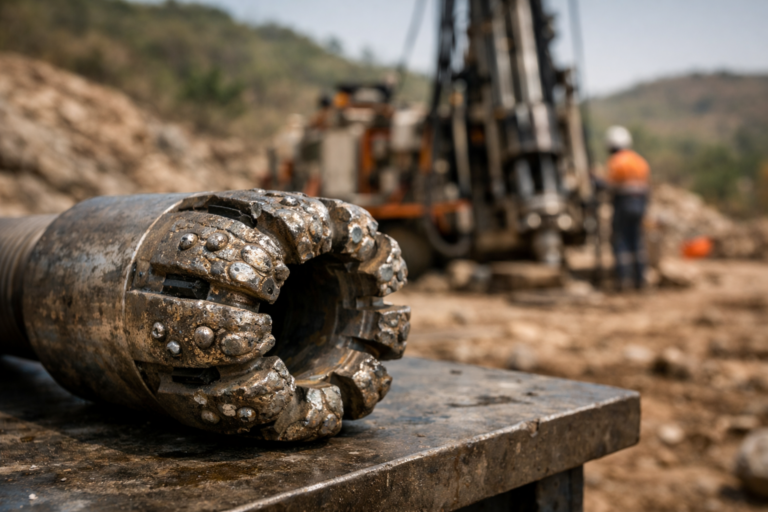
Bit Selection and Matrix Management: How to Stop Burning Bits and Stabilise Cost-Per-Metre in African Ground

Bit Selection and Matrix Management: How to Stop Burning Bits and Stabilise Cost-Per-Metre in African Ground

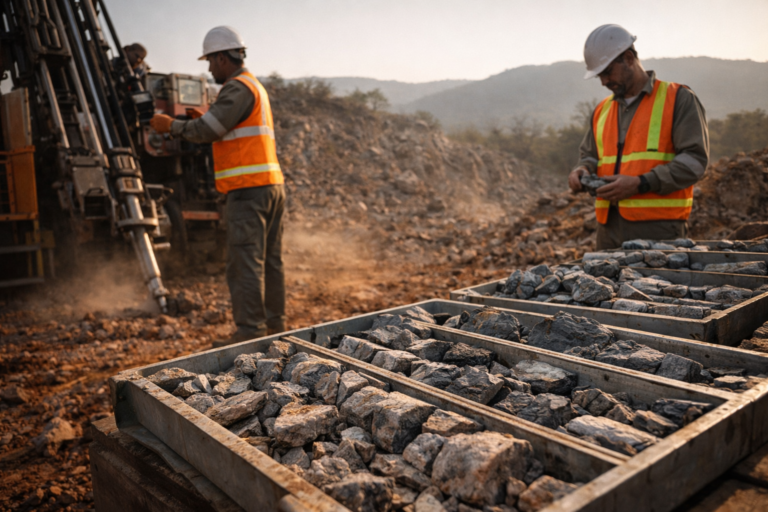
A programme starts well. Metres advance at acceptable rates. Recovery is within tolerance. Shift reports look clean. Then consumable costs begin to climb. Bits are coming out earlier than expected. Penetration rate drops suddenly. Torque rises progressively. Vibration increases. The core becomes more fragmented at certain intervals. The report notes “abrasive ground” and “difficult formation.”…


RPM, Feed, and Torque Discipline: The Parameter Control System That Stabilises Cost-Per-Metre on African Drill Sites

RPM, Feed, and Torque Discipline: The Parameter Control System That Stabilises Cost-Per-Metre on African Drill Sites

A programme is on pace. Metres are advancing. Shift reports look acceptable. Then torque begins to rise. Vibration increases slightly. Nothing dramatic. The driller adds feed pressure to keep penetration rate consistent. Core begins to fragment in the barrel. Breakout feels tighter than usual. Threads show light heating. By the next shift, penetration rate drops….

Non-Productive Time in African Drill Programs: Where It Really Comes From — and How to Reduce It

Non-Productive Time in African Drill Programs: Where It Really Comes From — and How to Reduce It

A weekly operations report shows 28 percent downtime. The summary line reads: “Ground conditions and logistics.” The assumption is that instability, fractured zones and remote supply constraints are unavoidable. The programme continues. Another week closes at 26 percent non-productive time. But when the downtime events are broken down, patterns emerge: Non productive time drilling Africa…

Water Management at Drill Sites: Reducing Consumption Without Compromising Hole Stability

Water Management at Drill Sites: Reducing Consumption Without Compromising Hole Stability

A remote exploration programme is running in semi-arid terrain. Water is trucked in every second day. The borehole supply on site is unreliable. Midway through the week, the truck is delayed. Storage tanks drop below planned levels. The instruction comes quietly: “Reduce water usage until the next delivery arrives.” Circulation slows. Cuttings begin to settle….

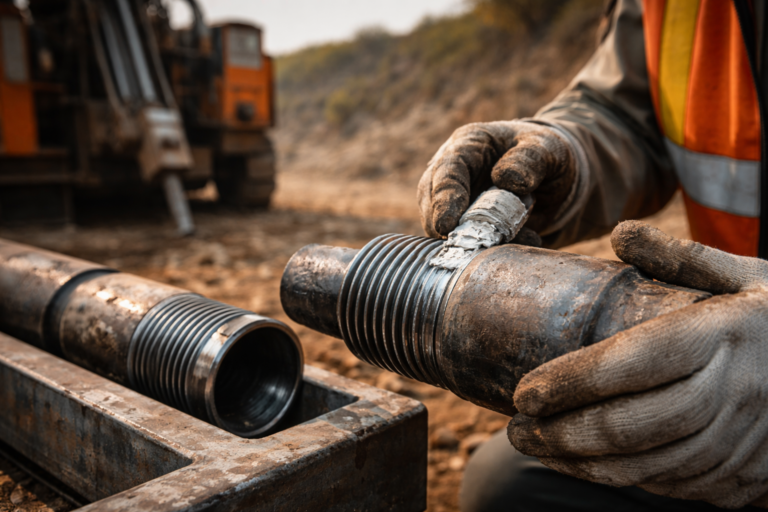
Thread Damage & Rod Failure: Early Warning Signs Most Crews Miss

Thread Damage & Rod Failure: Early Warning Signs Most Crews Miss

A drilling program can run smoothly for weeks. Penetration rates are consistent. Recovery is stable. The crew settles into rhythm. Then one rod joint begins to “feel tight” on makeup. The driller notices a slight increase in torque. Nothing dramatic. The shift continues. Two days later, a connection binds during the breakout. Threads show shiny…

Core Recovery in Broken Ground: Practical Adjustments That Save African Drill Programs

Core Recovery in Broken Ground: Practical Adjustments That Save African Drill Programs

A drilling program begins in competent ground. Penetration rates are stable. Core recovery exceeds 95 per cent. Logging progresses smoothly. Then the formation changes. The bit enters a fractured shear zone. Recovery drops to 68 per cent. Core trays begin showing broken fragments and ground-up material. Blocks wash away. Geological confidence drops. Confirmation drilling is…

Cost-Per-Meter Reality: Where Most African Drill Programs Quietly Lose Money

Cost-Per-Meter Reality: Where Most African Drill Programs Quietly Lose Money

Drilling budgets do not usually fail because of one catastrophic mistake. They fail quietly. A program begins on schedule. Tooling arrives. Crews mobilize. Early penetration rates look acceptable. Then productivity begins to fluctuate. Core recovery drops slightly. A few threads are damaged. A pump fails. A spare is delayed. A hole requires confirmation drilling. Individually,…

How to Select the Right Drill Rig for African Mining Conditions: Surface, Underground, Mobile and Geotechnical Applications

How to Select the Right Drill Rig for African Mining Conditions: Surface, Underground, Mobile and Geotechnical Applications

A drilling program begins with confidence. Budget approved. Depth targets defined. Timeline locked. Then terrain shifts. Access roads wash out. Ground conditions vary unexpectedly. Ventilation constraints appear underground. Mobilization takes longer than planned. Consumable burn rate exceeds projections. The problem is rarely only geology. In African mining environments, drill rig selection is not just a…

Spill Prevention at Drill Sites: Oil Mats, Grease Handling and Environmental Discipline in Remote African Camps

Spill Prevention at Drill Sites: Oil Mats, Grease Handling and Environmental Discipline in Remote African Camps

A hydraulic hose develops a slow leak late in the afternoon shift. The drip is small. It pools beneath the rig overnight. The next morning, light rainfall carries a thin sheen toward a shallow drainage channel near camp. By the time the issue is noticed, containment is reactive rather than preventative. At remote African drill…

Geotechnical Drilling for Mine Infrastructure: Reducing Risk in African Roads, Plant Pads and Tailings Facilities

Geotechnical Drilling for Mine Infrastructure: Reducing Risk in African Roads, Plant Pads and Tailings Facilities

A new plant pad is constructed at a remote mining site. Initial surveys show acceptable bearing capacity. Months later, after heavy seasonal rainfall, differential settlement appears. Cracking develops in slab sections. Drainage begins to pool. Remedial engineering follows. The cost of fixing inadequate ground investigation is always higher than the cost of doing it correctly…