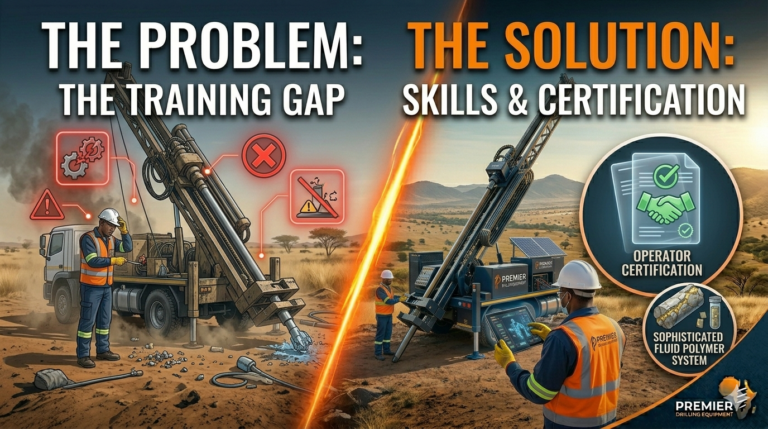
The Training Gap: Up-skilling Local Teams for Remote, Mechanized Exploration in Africa

The Training Gap: Up-skilling Local Teams for Remote, Mechanized Exploration in Africa

In the competitive landscape of Sub-Saharan African mineral exploration, the race to define a resource frequently focuses on deploying the latest technological innovations. The paradox, however, is that remote exploration projects often bring multi-million Rand mechanized drill rigs—complete with advanced hydraulics and telematics—into greenfield areas where local technical training infrastructure is limited. This creates a…
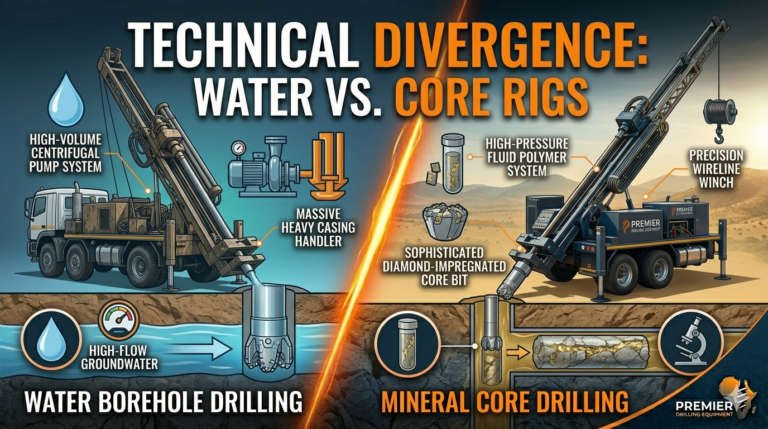
The Technical Divergence: Evaluating Water Borehole vs. Core Drilling Rig Architecture in Sub-Saharan Terrains

The Technical Divergence: Evaluating Water Borehole vs. Core Drilling Rig Architecture in Sub-Saharan Terrains

In the challenging geological and infrastructure landscapes of Sub-Saharan Africa, the success of a drilling project depends on selecting equipment that matches the primary operational objective. For civil engineers, hydrogeologists, and consultants managing groundwater development or structural exploration, understanding the technical specifications of their fleet is critical. While a drilling rig may look like a…

The Digital Drill Site: Real-Time Telematics, Automation, and the Future of Exploration in Africa

The Digital Drill Site: Real-Time Telematics, Automation, and the Future of Exploration in Africa

Mineral exploration in Sub-Saharan Africa is shifting away from its historically manual, reactive operational model toward a predictive, data-driven framework. We are witnessing the emergence of the ‘Digital Drill Site’—an ecosystem where remote assets are no longer isolated mechanical units but vital data nodes in a networked exploration campaign. For exploration managers and innovation directors,…

The Compliance Framework for Remote Greenfield Exploration in Africa: Balancing Production and Local Regulations

The Compliance Framework for Remote Greenfield Exploration in Africa: Balancing Production and Local Regulations

In the competitive landscape of Sub-Saharan African mineral exploration, the ability to rapidly define a resource is often prioritized above all else. For exploration managers and project directors, the mechanical availability of a drill rig is a critical metric. However, experienced operators know that a project doesn’t just stop when a rod string gets stuck;…

Preventative Maintenance Checklist for Hydraulic Systems on Exploration Drill Rigs

Preventative Maintenance Checklist for Hydraulic Systems on Exploration Drill Rigs

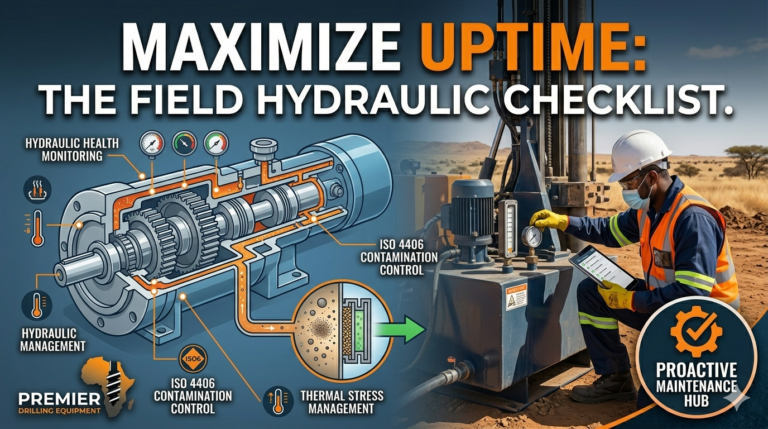
For exploration managers and drill supervisors operating in the demanding landscapes of Sub-Saharan Africa, a rig standing idle is a financial bleeding event. While mechanical failures are par for the course in exploration, the most common source of catastrophic downtime is the hydraulic system. From raising the mast and managing pulldown pressure to driving high-speed…

Evaluating Fluid Polymer Systems vs. Traditional Mud in Deep-Hole Diamond Drilling

Evaluating Fluid Polymer Systems vs. Traditional Mud in Deep-Hole Diamond Drilling

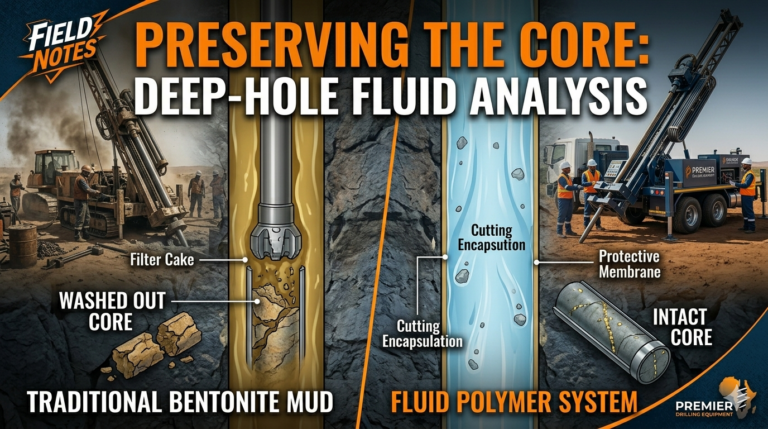
In deep-hole diamond core drilling (>500\text{m}), the downhole environment escalates in complexity with every joint of rod added to the string. As the borehole deepens, rotational torque, mechanical drag, downhole temperatures, and hydrostatic pressures compound exponentially. In these high-stress environments, the primary defensive mechanism against premature tool failure, hole collapse, and poor core recovery is…

The ROI of Mobile Drill Rigs in Greenfield Exploration: Reducing Rig-Up Time in Harsh Terrains

The ROI of Mobile Drill Rigs in Greenfield Exploration: Reducing Rig-Up Time in Harsh Terrains

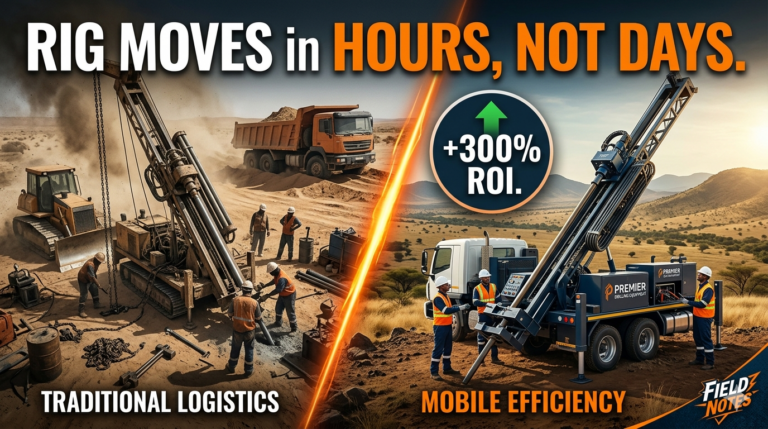
In greenfield mineral exploration, time spent non-drilling is capital bled. For exploration managers and project geologists operating across the remote, infrastructure-poor regions of Sub-Saharan Africa, the true cost of an exploration programme is not merely the price per metre of core pulled; it is heavily dictated by the efficiency of moving between targets.When utilizing traditional,…

Surface vs. Underground Drill Rigs: Choosing the Optimal Footprint for Narrow-Vein Gold Exploration

Surface vs. Underground Drill Rigs: Choosing the Optimal Footprint for Narrow-Vein Gold Exploration

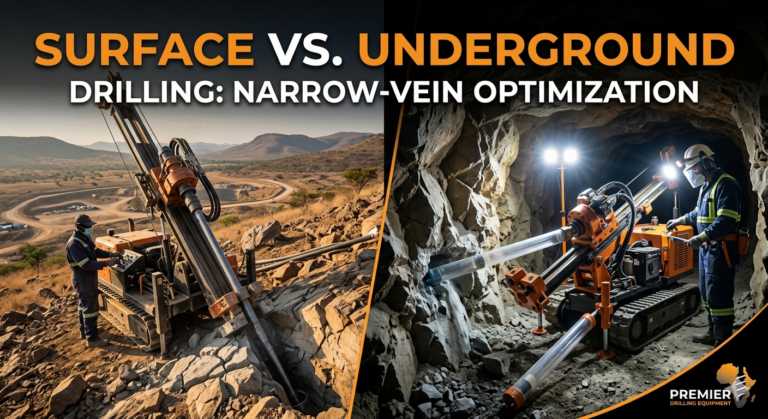
In narrow-vein gold exploration across Sub-Saharan Africa’s greenstone belts and structural shear zones, geological precision is directly tied to operational profitability. Unlike massive, low-grade deposits where broad spacing is acceptable, narrow-vein architectures—often measuring under two metres in width—demand hyper-targeted drilling campaigns. A variance of just a few degrees in hole deviation can mean the difference…

Preventing Doglegs in Deep Directional Coring: Real-Time Telemetry with Reflex Instruments

Preventing Doglegs in Deep Directional Coring: Real-Time Telemetry with Reflex Instruments

Introduction: Why Doglegs Destroy Drilling Economics A directional hole rarely fails suddenly. In most exploration programs, the warning signs emerge gradually. Torque rises incrementally. Rod wear accelerates. Penetration slows. Survey variance begins widening. Eventually, a borehole drifts far enough off plan that correction becomes expensive, mechanically difficult, or impossible. At depth, severe Borehole Deviation becomes…

Thermal Management in Hydraulic Systems: Operating VersaDrill Rigs in Extreme African Heat

Thermal Management in Hydraulic Systems: Operating VersaDrill Rigs in Extreme African Heat

Introduction: Why Heat Destroys Drilling Uptime Few operational problems erode drilling productivity faster than hydraulic overheating. A rig may begin a shift operating normally, only to become sluggish, inefficient, and unstable after several hours under severe heat load. Hydraulic responsiveness deteriorates. Pressure consistency fluctuates. Cooling systems struggle to dissipate thermal buildup. Eventually, drilling slows or…