The Compliance Framework for Remote Greenfield Exploration in Africa: Balancing Production and Local Regulations
In the competitive landscape of Sub-Saharan African mineral exploration, the ability to rapidly define a resource is often prioritized above all else. For exploration managers and project directors, the mechanical availability of a drill rig is a critical metric. However, experienced operators know that a project doesn’t just stop when a rod string gets stuck; it stops when regulatory compliance fails.
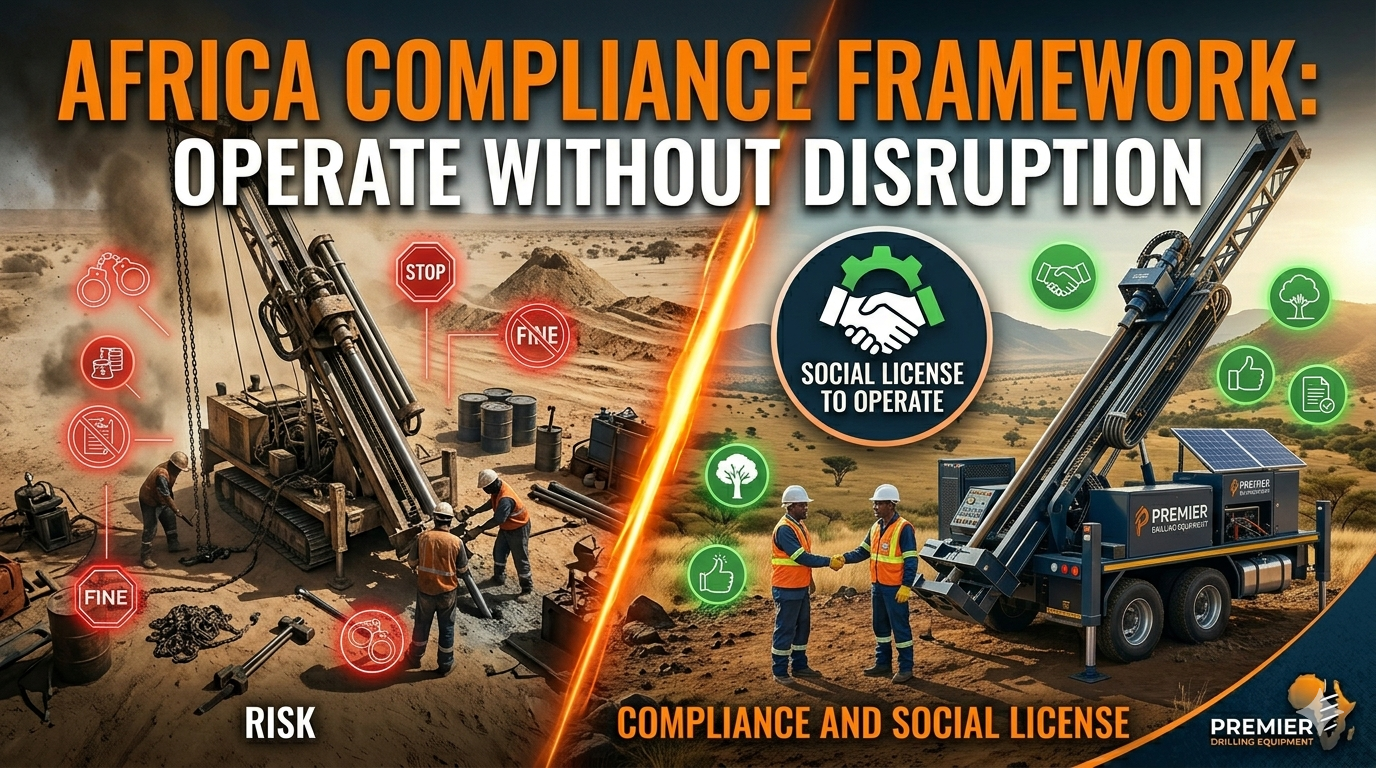
Failing to meet legal, environmental, or social obligations in remote greenfield jurisdictions (e.g., the DRC, Zambia, Namibia, or South Africa) can result in immediate project suspension, heavy fines, and irrevocable damage to corporate reputation. Compliance is not a bureaucratic hurdle; it is the fundamental operational framework that secures your “social license to operate” (SLO) and ensures continuity.
The Integrated Compliance Ecosystem
Compliance in remote exploration is a multi-front challenge, linking technical data management with environmental stewardship and community relations.
Environmental Management Plans (EMPs) and Rehabilitation
Remote greenfield sites require massive logical footprints. Clearing access roads, establishing multi-hectare camps, and constructing drill pads creates significant surface disturbance. Regulatory bodies strictly enforce Environmental Management Plans (EMPs) that dictate how these footprints are managed.
Key environmental compliance vectors include:
• Hydrocarbon Management: Strict containment protocols for fuel and lubricants, ensuring zero ground contamination in pristine environments.
• Water Stewardship: Safeguarding local surface water sources from exploration runoff or drilling fluid contamination.
• Site Rehabilitation: EMPs mandate that once a drilling programme is complete, the operator must rehabilitate access tracks and restore drill pads to their original state. This includes the responsible disposal of all consumable core drilling products, specialized fluid polymers, and rock cuttings. Failing this step can prevent the certificate of closure required to advance the project to feasibility.
Community Engagement and Securing the Social License
In remote locations, local communities are primary stakeholders. Compliance extends beyond national law into the realm of social contract.
• Social License to Operate (SLO): An SLO cannot be bought; it is earned through transparent engagement. Failure to secure this unofficial license—perhaps by mismanaging local job expectations or failing to respect traditional land-use agreements—can lead to community unrest, road blockades, and total project shutdown faster than any governmental stop-order.
• Local Content Requirements: Many jurisdictions strictly regulate local procurement and employment ratios. Operators must document their commitment to hiring locally and sourcing temporary infrastructure, jobs, and services from community providers, balancing this against the need for specialized technical expertise.
Implementing Standards in Isolated Camps
Operating hundreds of kilometres from secondary infrastructure requires implementing robust Health & Safety (H&S) standards that remain consistent, regardless of isolation.
Safety Certification of Heavy Equipment
The specialized nature of Surface Drill Rigs—with their high hydraulic pressures, moving heavy steel components, and high-voltage electrical systems—demands rigorous safety compliance. Rigs must undergo regular, documented safety audits, and all operators must hold valid, recognized technical certifications. Deploying uncertified equipment or untrained personnel is a critical legal liability.
Emergency Response and Mobilization Regulations
H&S regulations mandate detailed logistics plans for emergency medical evacuation in isolated areas. This includes securing 24/7 satellite communication, maintaining certified on-site medical staff, and establishing clear protocols for ground or air medevac. The compliance burden escalates during complex equipment deployment; for example, the regulations governing the rapid deployment and frequent camp setups of Mobile Drill Rigs place specific demands on journey management planning and fatigue risk assessment.
Technical Data and Export Compliance
Geological data is a national asset. The management, reporting, and transport of this data are heavily regulated.
• Data Reporting: National geological surveys often require regular reporting of mineral analysis or drilling progress. Operators must comply with data confidentiality laws while meeting national reporting benchmarks.
• Sample Export: Transporting consumable core drilling products or geological core samples across borders for specialized laboratory analysis requires meticulous permitting, including mineral export permits and adherence to strict chain-of-custody protocols.
Conclusion: Compliance as a Production Tool
In the demanding environment of remote African exploration, production speed is critical, but compliance is the safety net that ensures that speed is sustainable. The most efficient operators treat regulatory and social compliance not as external costs, but as essential production tools.
By managing the environmental footprint, securing community buy-in, and enforcing rigorous H&S standards, exploration managers can protect their initial investment and ensure the long-term viability of the asset.
To explore further technical field insights regarding regional legal requirements, rig safety specifications, and exploration logistics, return to our main Field Notes hub.
Consult with Our Regulatory Specialists
Navigating complex regional compliance require matched expertise and localized hardware specifications. Contact Premier Drilling Equipment today to discuss localized rig safety features, consult on EMP checklists, or request a customized regulatory assessment for your upcoming exploration programme.