The Digital Drill Site: Real-Time Telematics, Automation, and the Future of Exploration in Africa
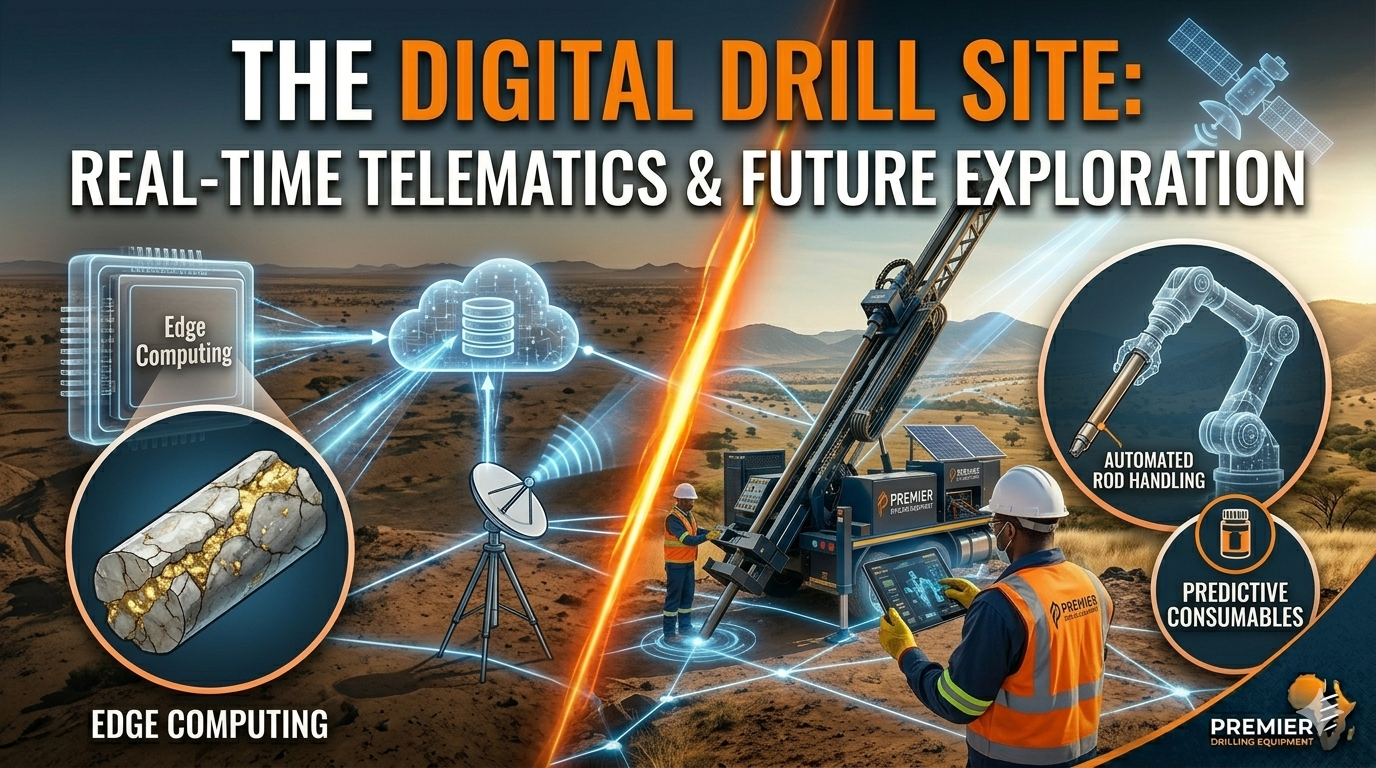
Mineral exploration in Sub-Saharan Africa is shifting away from its historically manual, reactive operational model toward a predictive, data-driven framework. We are witnessing the emergence of the ‘Digital Drill Site’—an ecosystem where remote assets are no longer isolated mechanical units but vital data nodes in a networked exploration campaign.
For exploration managers and innovation directors, this digital transformation is not a distant, high-cost luxury. It is becoming an operational imperative to manage escalating logistical complexities, strict safety regulations, and the need for immediate, on-site decision-making in remote, greenfield locations. The integration of real-time telematics, semi-automation, and edge computing is defining the future of exploration efficiency.
The Role of Telematics in Asset Optimization
The backbone of the Digital Drill Site is telematics—the remote monitoring of asset health and operational metrics. In a reactive model, maintenance happens after a component fails; in a predictive digital model, the component alerts the maintenance team before the failure point.
Sensors integrated into heavy-duty Surface Drill Rigs monitor hundreds of data streams, including vibration analysis, hydraulic pressure, feed rate, and rotation speed. This data is beamed via satellite (e.g., VSAT, Starlink) to off-site engineers. Predictive algorithms analyze this input, triggering preventative maintenance orders and allowing teams to manage component lifespans across vast geographical distances. Telematics ensures maximum uptime by extending asset availability and preventing catastrophic failures that stop production for weeks.
Semi-Autonomous and Automated Drilling Systems
Automation is frequently misunderstood in the context of mineral exploration. While fully autonomous rigs operate successfully in controlled तेलwell environments, semi-automation is the pragmatic application for exploration: taking repetitive, low-value tasks and legalizing them.
Semi-autonomous drilling systems manage functions such as automated rod handling, precise hole alignment, and optimized feed pressure management, adapting instantly to rock hardness. By applying optimal force, these systems enhance the lifespan of both the rig and consumable core drilling products, reducing structural wear and ensuring consistent core sample recovery quality. Critically, automated rod handling takes personnel out of the ‘danger zone’—the linear path of heavy steel rods—drastically reducing Health & Safety exposure during high-risk rig-up sequences. This level of automated safety compliance is vital for highly agile Mobile Drill Rigs that move frequently between targets.
Edge Computing and Real-Time Geological Decision Making
The value of digital technology is maximized by processing data as close to the source as possible. Edge computing places powerful processing units at the drill site.
Geological data from ‘logging while drilling’ (LWD) and on-site XRF/LIBS analysis can be processed instantly rather than waiting weeks for sample export and assay lab results. Geologists can make real-time decisions on hole steering, determining whether to continue, shallow, or deflect a hole immediately. This ability to instantly adapt reduces total drill metres per campaign and decreases the total deployment time of heavy assets like Surface Drill Rigs, accelerating the progression from greenfield discovery to resource definition.
Predictive Logistics and the Smart Consumables Thread
The digital thread must extend beyond the machine itself and into the logistics chain. Smart rigs integrated into centralized exploration systems can predict the remaining life of critical components, such as diamond-impregnated drill bits or premium drill rod threads, based on cumulative rotation hours and real-time formation hardness data.
When a rig identifies that consumable core drilling products are nearing their operational limit, it automatically triggers an inventory re-order within the centralized procurement system. This automated logistics strategy ensures that vital consumables arrive at remote exploration camps precisely before the component fails, completely eliminating the ‘no consumables’ downtime event.
Conclusion: Engineering the Digital Future
The Digital Drill Site is not about replacing human geologists; it is about providing them with networked, optimized operational platforms. Transitioning to telematics-ready, semi-autonomous drill systems allows exploration campaigns in Africa to achieve higher safety benchmarks, reduce environmental footprints through smarter drilling, and accelerate discovery timelines by processing technical data in real-time.
Innovation directors must move from piloting localized digital concepts to deploying integrated digital-ready assets that are compatible with the future of networked exploration.
To explore further technical field insights regarding automation readiness, telematics data architecture, and regional exploration logistics, return to our main Field Notes hub.
Consult with Our Digital Innovation Team
Ensuring your exploration fleet is ready for the digital future requires matching localized geographical targets with customized telematics solutions and hardware specifications. Contact Premier Drilling Equipment today to discuss digital readiness, review semi-autonomous rig specifications, or request a customized telematics consultation for your upcoming programme.