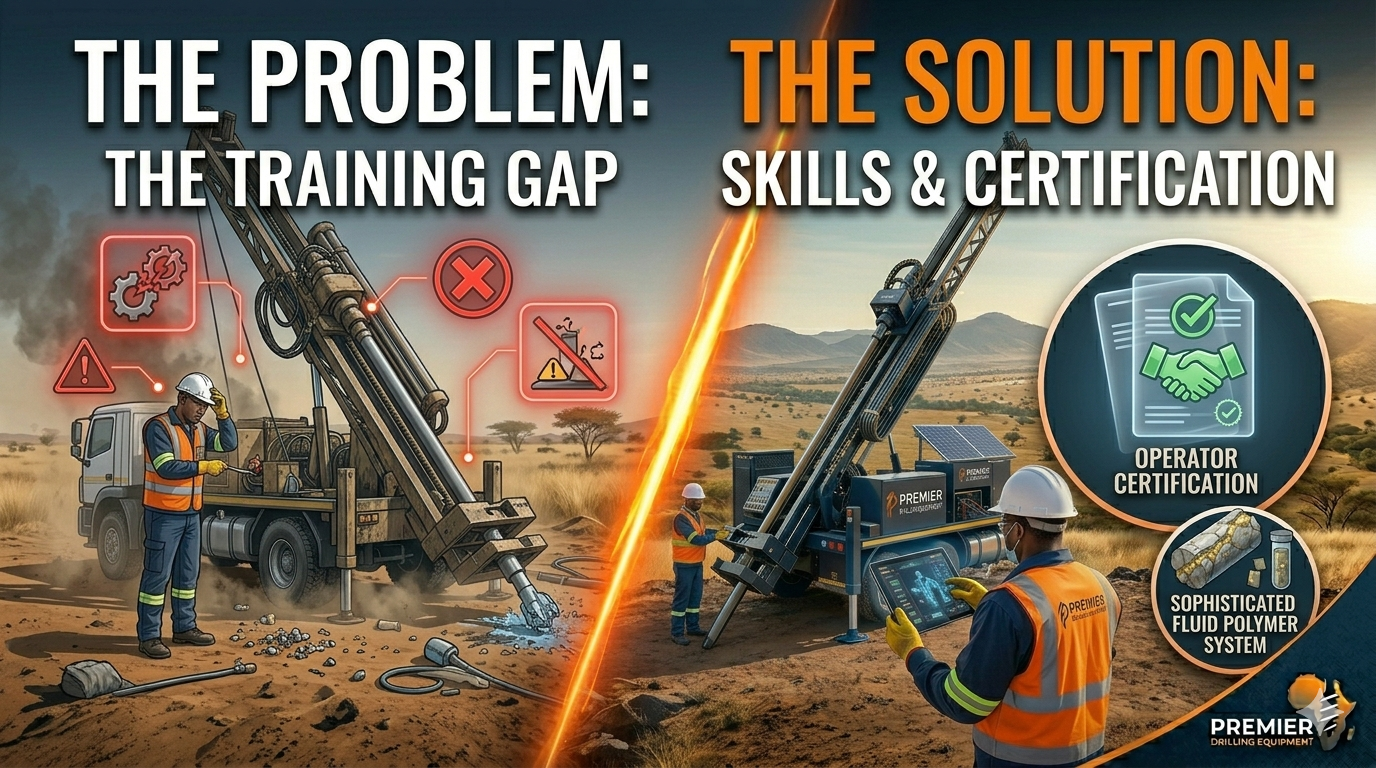
The Training Gap: Up-skilling Local Teams for Remote, Mechanized Exploration in Africa
In the competitive landscape of Sub-Saharan African mineral exploration, the race to define a resource frequently focuses on deploying the latest technological innovations. The paradox, however, is that remote exploration projects often bring multi-million Rand mechanized drill rigs—complete with advanced hydraulics and telematics—into greenfield areas where local technical training infrastructure is limited.
This creates a severe operational bottleneck: the “Training Gap.” Failing to bridge this gap results in mechanical catastrophic failure, poor core recovery, and unacceptable safety incidents. Up-skilling local teams is no longer just a regulatory local content requirement; it is a critical strategy for mitigating operational risk and ensuring equipment longevity in isolated environments.
The Shift to Mechanization and Automation Readiness
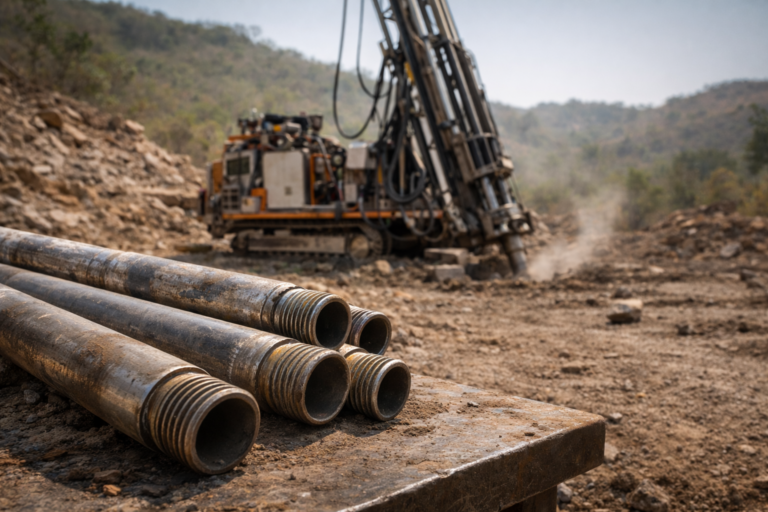
Exploration drilling has undergone a technical revolution. Historically manual diamond coring, which relied heavily on physical labour and intuitive “feel,” has given way to hydraulic and semi-automated systems. Modern Surface Drill Rigs are complex technical platforms utilizing integrated control logic and sophisticated telematics.
Transforming Labourers into Rig Pilots
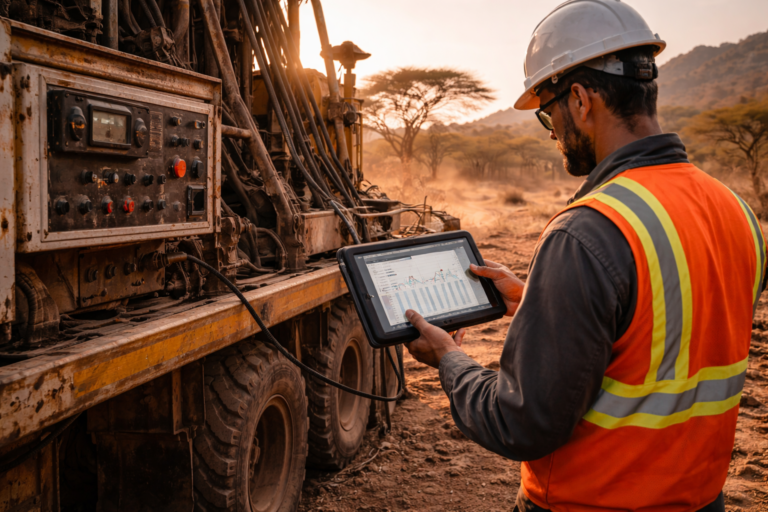
The required skill set has transformed. Local operators can no longer function primarily as manual labourers; they must become technical ‘pilots’ of networked machinery. Bridging the Training Gap means up-skilling personnel to interpret real-time digital feedback, manage complex hydraulic circuits, and understand how varying consumable core drilling products and fluid polymer chemistries react in specific geological formations. Without this technical foundation, the advanced features of a modern rig are neutralized, leading to inefficient operations and premature wear.
HSE Culture and Safety as a Technical Skill
Safety is often viewed as a compliance checkbox. In remote, isolated exploration, safety must be integrated as a technical competency.
Integrating International HSE Standards
Establishing a robust HSE (Health, Safety, and Environment) culture requires integrating international standards with localized cultural contexts. Training operators on high-performance Surface Drill Rigs must move beyond basic operation. The focus must be on situational awareness: identifying and mitigating risks during mobilization, setup, and high-rpm operations.
For highly mobile fleets using Mobile Drill Rigs, this safety competency is doubly vital. Operators must be trained in specialized rapid deployment protocols, ensuring that repeated rig-up and rig-down sequences across rugged terrain are executed without compromising personnel safety or structural integrity. A technically safe operator is the most critical asset on a remote site.
Sustaining Skills and Sustainable Local Content
Regulatory pressure for local content and capacity building is increasing across Africa. Formalized up-skilling programmes are the only sustainable response.
Combining Classroom and Field Competency
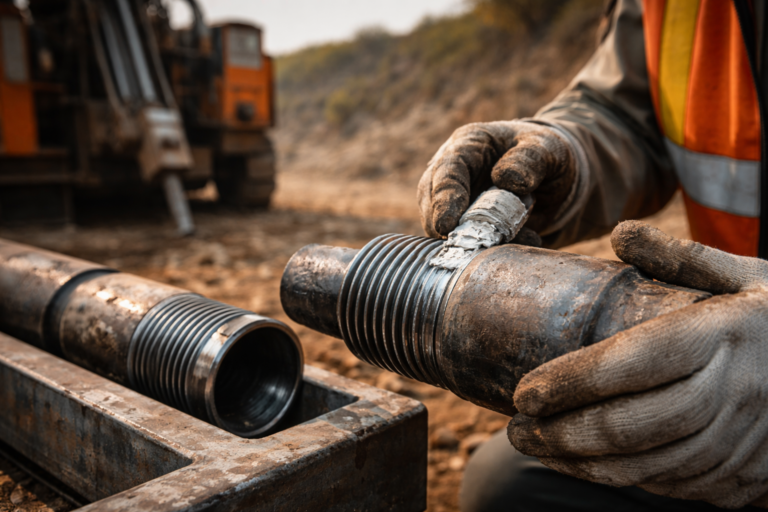
Effective skills transfer cannot happen solely through generic OJT (On-the-Job Training). It requires structured, formal programmes combining theoretical classroom training (e.g., hydraulics, thread maintenance, telematics interpretation) with extensive field mentoring. This training must focus on the precise application of consumable core drilling products, fluid polymer chemistry, and premium bit management tailored to local formations. By formalizing these technical skills, contractors not only meet compliance benchmarks but also build a resilient, technically capable local workforce that drives long-term profitability.
Closing the Circle: Operator Skill as Equipment Defence
The human factor directly influences the mechanical lifespan of the asset. Technically competent, trained operators are the primary ‘first line of defence’ against equipment failure in remote locations.
An up-skilled operator can identify subtle hydraulic anomalies or interpret telematics warnings before they escalate into catastrophic downtime events. Investing in local human capital is, ultimately, an investment in reducing total cost of ownership and ensuring the exploration project advances safely and efficiently.
Conclusion: Workforce Development as a B2B Partnership
Bridging the Training Gap is not a CSR (Corporate Social Responsibility) project; it is an essential operational requirement. Workforce development, formalized safety certification, and consistent skills transfer are the foundation of successful, long-term mineral exploration in Africa.
By up-skilling local teams, contractors and mining executives secure their “social license to operate” and ensure that their high-tech assets perform to their true technical potential.
To explore further technical field insights regarding local capacity building, rig safety specifications, and regional exploration logistics, return to our main Field Notes hub.
Consult with Our Technical Training Team
Optimizing your exploration fleet’s performance requires matching advanced hardware with highly trained local teams. Contact Premier Drilling Equipment today to discuss localized up-skilling partnerships, review customized safety specification data, or request a technical training consultation for your upcoming programme.