The Digital Drill String: Redefining Driller Competency in the Age of Automation
As the Southern African mining sector embraces fourth industrial revolution (4IR) technologies, diamond drilling is undergoing a paradigm shift. Remote operation, automated rod handling, real-time parameter logging, and self-sharpening matrix metallurgy are no longer concepts; they are the baseline operational requirement for deep exploration and definition programmes across complex geologies.
However, a recurring conversation I have with operations managers from the Northern Cape to the Copperbelt involves a critical operational anxiety: “Is my crew ready for this technology?”
The true risk of automation is not technical failure; it is underutilization. We are seeing advanced MBI systems, engineered for maximum ROP and minimal Scope 1 emissions, operating at 60% capacity because the driller lacks the confidence, or the technical acumen, to trust the data parameters. Redefining driller competency is not a training imperative; it is a prerequisite for achieving technical sovereignty and operational profitability.
The Human Constraint: Navigating the Technology Fear
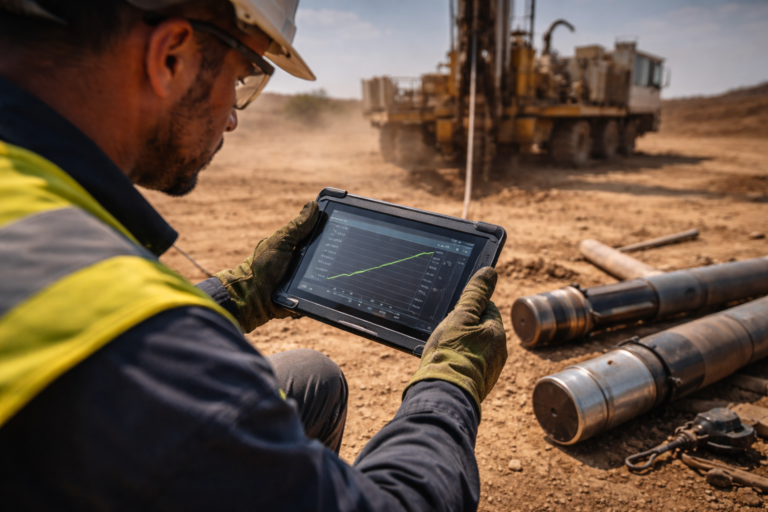
Advanced drilling systems require a complete shift in mindset. For decades, the measure of a good driller was ‘manual feel’—the intuition built over years on a manual chuck rig. While that intuition remains valuable, the integration of automation (like hands-free breakout tools or computerized weight-on-bit systems) demands that a driller trust a digital interface (HMI) over tactile feedback.
The operational fear that automated tech is ‘too complex’ often leads to a cycle of underperformance. To protect the capital equipment, operators become risk-averse, ignoring the very digital insights designed to maximize performance. This ‘skills gap’ is where optimized ROP and component life are lost.
Automation Demands More, Not Less, Acumen
There is a dangerous misconception that automation makes drilling simple. In reality, it forces the driller to move beyond basic machine operation and become a Drilling Technician.
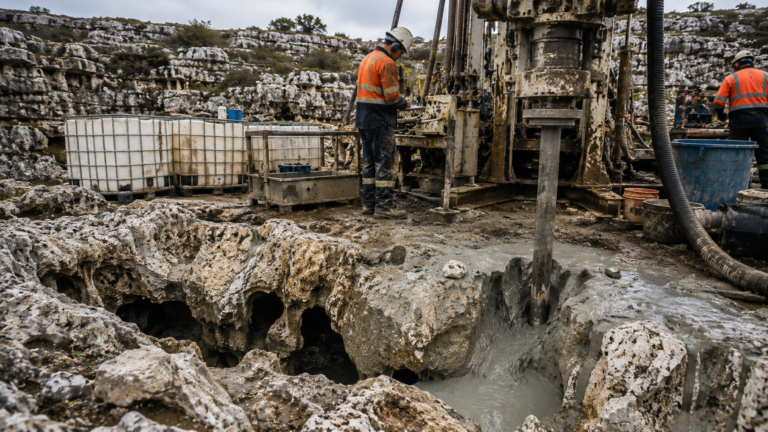
An automated MBI rig can maintain an idealized RPM and ROB, but it cannot analyze the geology it is encountering. When entering a weathered transition zone or friable ground (as discussed in Article 4), the automated system may apply excessive WOB in a misguided attempt to maintain penetration. A competent Driller 4.0 must have the technical fluency to interpret this situation via the parameters log, override the system, and implement a targeted geotechnical retention strategy before the bit glazes or the sample is lost.
Driller 4.0: Mastering Parameters Fluency
The modern driller must be fluent in data. Competency is no longer defined by how many metres were drilled, but by how efficiently those metres were achieved.
This new competency includes:
- Parameters Diagnostic: Utilizing real-time logs (torque, WOB, RPM, hydraulic pressure) to diagnose bit condition (e.g., recognizing a glazed bit via hydraulic pressure spikes without a decrease in torque).
- Metallurgical Understanding: Knowing why a specific MBI matrix formula requires a certain parameter set to maintain self-sharpening efficiency.
- Predictive Maintenance: Moving beyond failure response and utilizing system analytics to identify component wear before it results in critical downtime.
Technical Sovereignty through PDE Training Partnerships
Premier Drilling Equipment is not a vendor; we are a dedicated technical partner. When we integrate advanced MBI systems into an African operation, we prioritize technical knowledge transfer and skills development.
We are invested in bridging the digital skills gap through structured, technician-level training:
- System-Specific Certification: Providing deep-dive technical training on MBI automated breakout systems, digital control interfaces, and hydraulic parameters optimization.
- Operational Audits: PDE technical staff conduct on-site audits to assess not just machine condition, but driller competency and parameters management, identifying operational inefficiency.
- Simulation and Skills Development: Utilizing simulation tech (where appropriate) and hands-on guidance to build driller confidence in operating remote and automated systems in challenging, high-stakes geologies.
Technical Note: Parameters vs. Perception – Trusting the Data
I often see drillers reducing RPM when entering a ‘hard’ zone because ‘it feels right.’ However, an abrasive formation might require increased RPM combined with reduced WOB to encourage the MBI matrix to erode correctly and expose fresh diamonds. Relying on perception over the specific parameters log wastes fuel and induces premature bit failure. Trust the data, understand the engineering.Own Your Technical Future
Automation is the defining force of modern exploration economics (TCO) and sustainability (ESG). However, those investments are only as good as the competency of the team operating them. By redefining what it means to be a skilled driller and prioritizing advanced technical training, Southern African operations can achieve complete technical sovereignty—driving both operational safety and data sovereignty.
Premier Drilling Equipment is ready to bridge your skills gap. Contact our training and technical partnership team today.