A Field Guide to Preventing Thread Galling on MBI Drill Rods & Casing
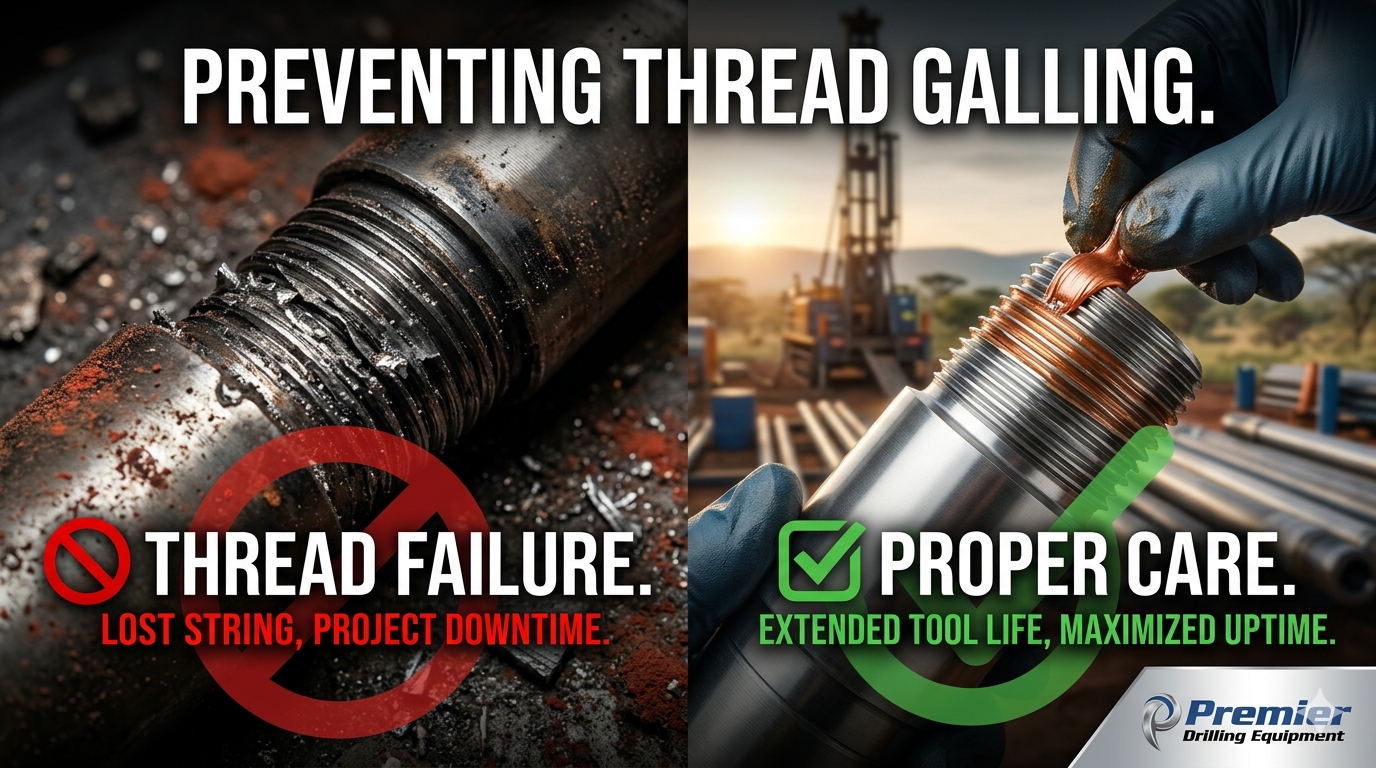
In diamond core drilling, thread galling is the silent killer of your drill string. Galling is a form of adhesive wear—a localized “cold welding” caused by excessive friction and pressure between the pin and box joints. When threads gall, your project faces costly downtime, potentially resulting in dropped strings, lost rods, and catastrophic downhole failures.
Even the highest-quality MBI hardware is susceptible if handled poorly in the field. Preventing drill rod thread damage is not just a best practice; it is a critical component of operational success. At Premier Drilling Equipment, we provide the premium MBI rods that set the industry standard, but their longevity depends entirely on your rig crew’s handling protocols.
Root Causes of Galling in the Field
Galling typically initiates during the make-up or break-out cycles. If your crew is experiencing frequent drill rod thread damage, check for these common failures:
- Excessive Make-up Torque: Inexperienced operators often overtighten joints. This creates extreme pressure, deforming the thread profile and stripping the protective surfaces.
- Environmental Contamination: In remote African geology, airborne dust, sand, and iron ore particles act as grinding paste. If these contaminants enter the thread path, they compromise the integrity of the connection immediately.
- Improper Lubrication: Using standard grease or failing to lubricate consistently leads to metal-on-metal contact. You must use a specialized drilling grease Africa-grade, designed for high-pressure, extreme-environment applications.
- Joint Misalignment: Poor technique during the assembly process—specifically, failing to ensure the pin is perfectly centered in the box—is the most common cause of cross-threading and initial galling.
Step-by-Step Preventative Protocol
Implement this checklist on your rig to master how to assemble MBI drill rods safely and maximize component life:
- Visual Inspection and Cleaning: Before every trip, clean both pin and box threads with a stiff wire brush. Inspect for burrs, cracks, or deformation. If a thread is damaged, pull the rod from the string immediately.
- Ensure Perfect Alignment: Utilize the rig’s hoisting plug and guide tools to align the pin and box joints. Never force a connection; it should spin on freely by hand until it shoulders.
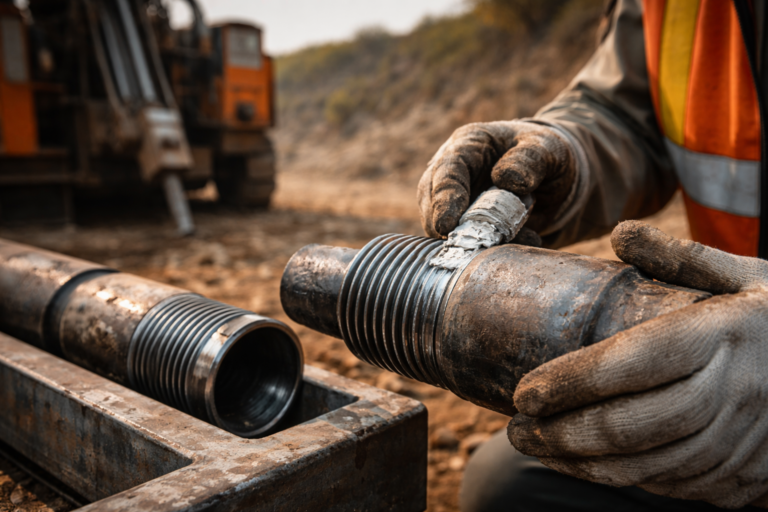
- Apply Specialized Lubricant: Apply a uniform, thin coat of high-performance thread compound to the pin threads. Using a specialized drilling grease Africa-grade—specifically zinc- or copper-based anti-seize—is essential for mitigating friction.
- Adhere to Torque Specs: Use the correct break-out/make-up torque for your specific rod size. Avoid the “more is better” mindset; proper shoulder contact is all that is required for a secure, pressure-tight joint.
The Operational Payoff
Consistent thread maintenance is a direct contribution to your bottom line. By extending tool life through these simple habits, you drastically reduce your annual expenditure on rod replacement. When you minimize drill rod thread damage, you reduce the risk of vibration-related failures, increase the reliability of your wireline systems, and keep the rig spinning.
Proper maintenance turns high-quality MBI casing into a long-term asset, protecting your exploration budget against the high costs of unplanned downtime.
Conclusion
Premium hardware requires professional care. The longevity of your drill string is the result of thousands of small, disciplined actions performed by your rig crew every single day.
For technical advice on how to assemble MBI drill rods, or to source high-performance field lubricants and genuine MBI drill string components, contact the Premier Drilling Equipment team. Let us help you optimize your diamond drilling troubleshooting processes and secure your site’s operational future.