Diagnosing Core Recovery Failures: Inner vs. Outer Tube Maintenance
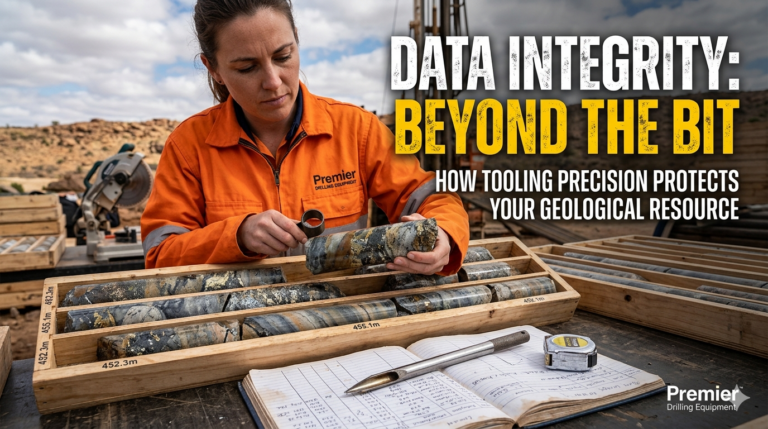
In mineral exploration, the core recovery percentage is your most critical metric. When samples are washed out, crushed, or lost, geological modeling becomes speculative, potentially leading to multi-million-dollar misinterpretations of the orebody. High-precision diamond core drilling rock sampling relies on the integrity of the wireline system. Even minor deviations in component tolerances can cause core blocks or sample degradation. At Premier Drilling Equipment, we partner with exploration teams to ensure your wireline core barrel troubleshooting leads to actionable solutions and maximum recovery rates.
Structural Diagnosis: Inner vs. Outer Tube Dynamics
Understanding the distinct mechanical roles of your core barrel components is the first step in improving core recovery rate.
The Outer Tube
The outer tube rotates with the drill string and bears the full force of borehole pressure.
- It serves as the primary conduit for drilling fluid.
- Wear or bending in the outer tube induces vibration, causing core fractures before the sample enters the barrel.
- Compromised outer tubes lead to borehole deviation and excessive bit wear.
The Inner Tube
The inner tube remains stationary, shielding the core from the rotation of the outer tube.
- It protects sensitive or friable geological samples.
- Distortion or damage to the inner tube leads to core jamming and crushing.
- If the inner tube rotates due to stabilizer failure, it acts as a drill bit, grinding your sample into useless fines.
Key Signs It’s Time for Component Replacement
Your gear communicates its status through physical failure indicators. If your recovery rate is dropping, inspect for these critical faults:
- Tube Deformation: Inner tubes that are out-of-round or warped—often from rough handling or excessive downhole stress—will physically bind the core, causing a core block.
- Stabilizer and Landing Shoulder Wear: Worn stabilizers or degraded landing shoulders cause the inner tube to lose its stationary status, leading to catastrophic sample grinding.
- Fluid Flow Irregularities: If your MBI head assemblies show faulty fluid valves or blocked venting holes, pressure will bypass the inner tube. This creates a “water wash” effect, eroding soft or fractured core samples before retrieval.
Actionable Best Practices for High Recovery
Rig-site discipline is the difference between a high-confidence resource model and a failed drilling program. Use these protocols to maintain assembly tolerances:
- Deploy Go/No-Go Gauges: Regularly use specialized inner tube gauges. If a tube fails the gauge test, remove it from the core barrel inner tube replacement rotation immediately.
- Rigorous Core Lifter Management: Replace core lifters frequently. A worn lifter fails to catch the core, leading to lost samples during trips.
- Utilize Genuine MBI Components: Off-spec or counterfeit internal parts often lack the necessary hardness. Always use premium MBI components to ensure perfect fitment within your wireline core barrel troubleshooting protocol.
Conclusion
High-quality geological data is the product of precision engineering and rigorous maintenance. When you prioritize component health, you protect the geological integrity of every meter drilled.
Is your equipment hindering your recovery rates?
Contact Premier Drilling Equipment for genuine MBI core barrel assemblies, core barrel inner tube replacement kits, and expert technical guidance. Let us help you audit your fleet and return your project to peak sampling performance.