Selecting the Right Wireline Core Barrel Size (A to P) for Complex Strata
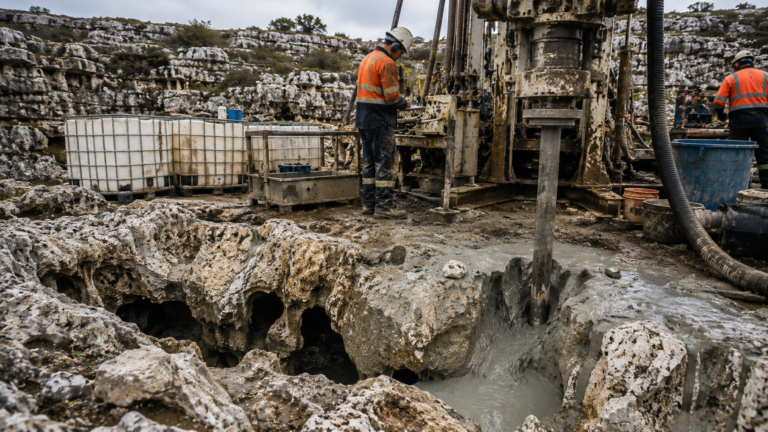
In mineral exploration, selecting the correct hole and core diameter is a strategic balancing act between tool strength, penetration speed, and the geological resolution required for resource estimation. Choosing the incorrect wireline core barrel sizes in complex or highly fractured ground often results in catastrophic string loss, poor core recovery, or the acquisition of unrepresentative samples.
At Premier Drilling Equipment, we advocate for a diagnostic approach to selecting drilling equipment. By matching the tool strength to the specific strata, you ensure that your diamond core drilling rock sampling program delivers high-integrity data while maintaining efficient cost-per-metre metrics.
Decoding the Alphabet Soup (A to P Sizes)
The wireline sizing hierarchy is engineered to accommodate varying geological environments, ranging from competent basement rock to unconsolidated surface overburden.
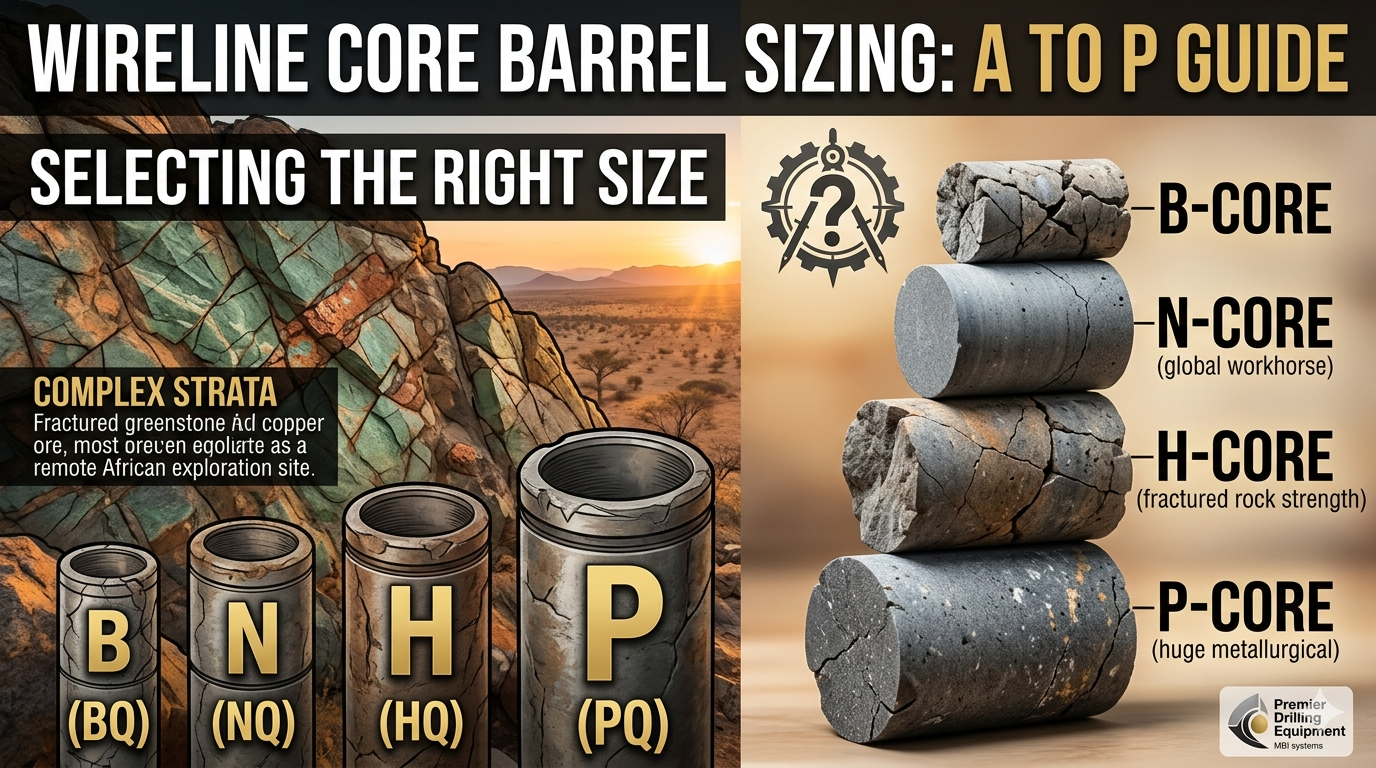
- B-Size (BQ): The most compact standard. It provides the highest penetration speeds in deep exploration holes. However, because of the slim string diameter, it is highly susceptible to vibration and bending, making it unsuitable for fractured ground drilling.
- N-Size (NQ/NQ3): Widely considered the global exploration workhorse. It offers an optimal balance between drill string stability, handling weight, and a sufficient core sample diameter for reliable assaying.
- H-Size (HQ/HQ3): The preferred choice for weathered upper zones, fault zones, and unstable formations. The increased diameter provides superior structural rigidity, significantly reducing rod bending and improving recovery in fragile rock.
- P-Size (PQ/PQ3): A massive diameter configuration reserved for bulk sampling, metallurgical testing, or drilling through extremely soft, unconsolidated overburden that would collapse in smaller holes.
Sizing Strategy for Complex Ground Formations
Operating in African greenstone belts and copper deposits requires a proactive approach to wireline core barrel sizes.
Triple-Tube Systems (e.g., NQ3 vs. NQ)
When encountering friable, faulted, or highly jointed rock, standard double-tube systems often fail to protect the core from wash-out. Upgrading to a triple-tube system—which utilizes a split inner tube—prevents the sample from grinding against the inner tube wall during retrieval, ensuring that the structural integrity of the core is preserved for accurate geological modeling.
Hole Telescoping Strategy
Deep exploration programmes often require a telescoping approach to reach target depths.
- Stage 1: Start with PQ or HQ to penetrate and case off unstable, weathered upper formations.
- Stage 2: Once through the overburden and into competent rock, down-size to NQ or BQ to progress the hole efficiently and safely to depth.
The MBI Head Assembly Advantage
Transitioning between sizing platforms requires hardware that you can trust. Premium MBI head assemblies are designed to provide consistent performance across the full range of barrel diameters. These assemblies ensure reliable inner tube latching and precise fluid bypass—the critical technical factors that keep your inner tube stationary and your core protected, regardless of the wireline core barrel sizes deployed.
Conclusion
The difference between a successful exploration campaign and a project hampered by “stuck strings” often comes down to the initial tooling configuration. By aligning your hardware with the ground conditions, you maximize data integrity and protect your project’s bottom line.
Is your current configuration optimized for your next target?
Contact the technical team at Premier Drilling Equipment today. We specialize in mapping out the ideal MBI tooling configuration to ensure your upcoming drilling campaign is both safe and productive.