Confined Space, High Productivity: Optimizing MBI Tooling for Underground Fan Drilling
In the deep-level gold and platinum mines of the Bushveld Complex, efficiency isn’t just about the equipment you use—it’s about how that equipment fits into the environment. Underground drilling presents a logistical paradox: the need for high-precision, high-speed data collection within the most restrictive physical headings.
To maintain a competitive rate of penetration (ROP) while managing the safety risks of confined spaces, site managers must pivot from general exploration tactics to a specialized underground strategy powered by MBI’s purpose-built engineering.
The Logistics of the Deep: Managing Restricted Space
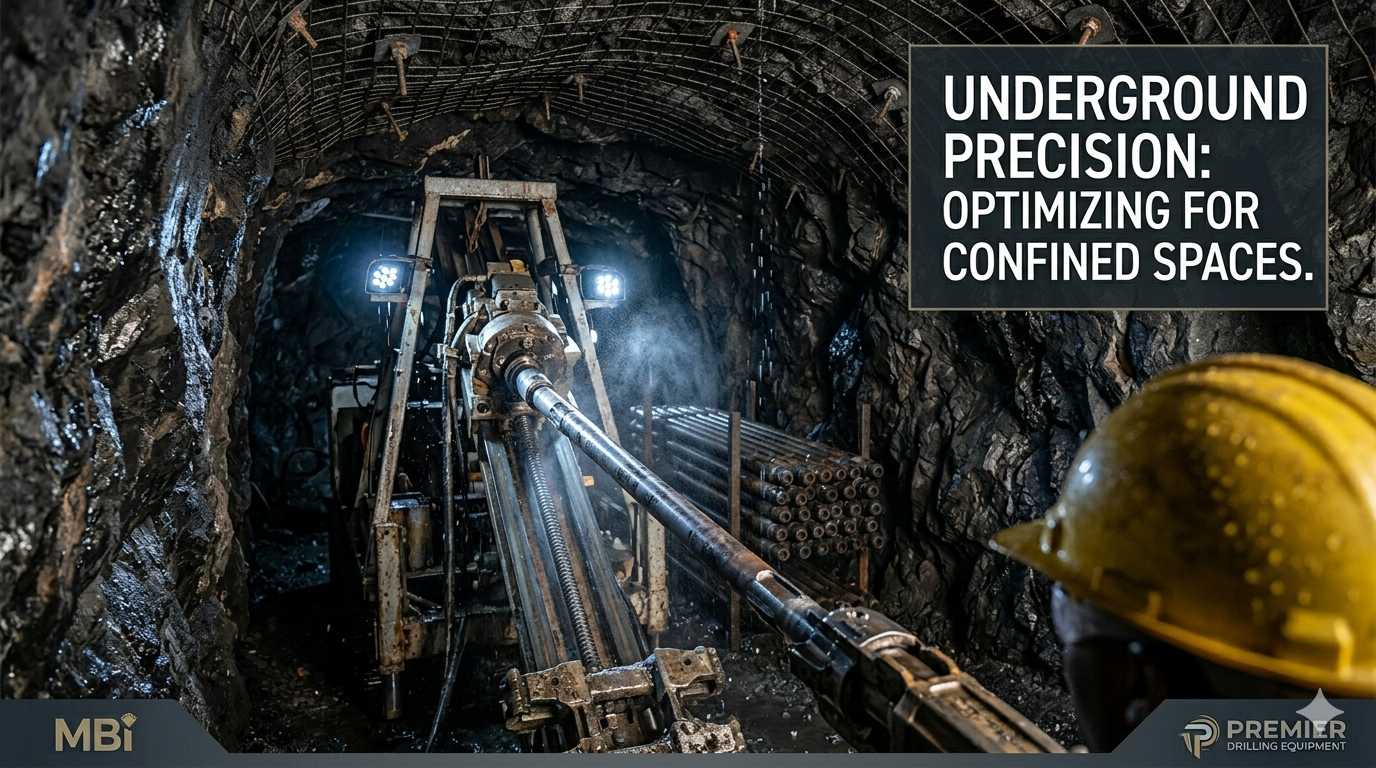
Working in a 3.5m heading means that every centimeter of rod length and every second of “make-and-break” time counts. Standard surface rods are often too cumbersome for rapid handling in these environments, leading to increased fatigue and slower shift cycles.
MBI addresses this through shorter rod lengths and specialized wrench flats. These design features allow for:
- Faster Handling: Optimized rod lengths ensure that the string can be pulled and stacked efficiently without clashing with the “back” (roof) of the tunnel.
- Reduced Manual Intervention: Precision wrench flats facilitate a more secure grip for automated breakout systems, reducing the time drillers spend in the “red zone” near the rotation head.
Deviation Control in Fan Drilling: MBI’s Stabilization Advantage
In underground fan drilling, where multiple holes are drilled from a single station to map an orebody, collar precision and deviation control are non-negotiable. A hole that drifts just a few degrees off-target can miss the reef entirely or, worse, intersect vital mine infrastructure.
MBI’s rigid stabilization systems are engineered to counteract the natural tendency of the drill string to “drop” or “climb” in complex reef structures. By utilizing tighter tolerances between the outer tube and the borehole wall, MBI stabilization ensures that the bit stays on the planned trajectory, protecting both the integrity of your geological data and the safety of the mine layout.
Safety as a Productivity Driver: The Hands-Free Benefit
The modern underground site is increasingly defined by its ESG and safety leadership. By integrating MBI tooling designed for modern rod-handling systems, Premier Drilling helps mines move toward “hands-free” operations.
Surface vs. Underground Tooling Requirements
| Feature | Surface Exploration | Underground Fan Drilling |
|---|---|---|
| Primary Constraint | Depth & Harmonics | Headroom & Lateral Space |
| Rod Length | Standard 3.0m – 6.0m | Specialized 1.5m – 3.0m |
| Stabilization | Deep-hole deflection focus | High-intensity deviation control |
| Handling | Crane/Derrick assisted | Manual or Automated handling |
| Reducing the physical strain on the crew doesn’t just lower the risk of injury; it maintains a consistent ROP across the entire shift. A driller who isn’t battling cumbersome tools is a driller who is focused on precision and core recovery. |
Technical Note: Managing Rod Handling in 3.5m Headings
When drilling in restricted headings, ensure your rod-racks are positioned to minimize lateral movement. Using MBI’s specialized short-format rods reduces the “swing radius,” allowing for safer, faster loading and unloading compared to standard surface variants.Engineering Predictability Underground
Premier Drilling Equipment is committed to bridging the gap between global R&D and the specific, harsh conditions of the African mining landscape. By utilizing MBI’s underground-specific tooling, we provide our partners with the technical authority to operate safely and efficiently where space is at a premium.
Are your underground shift targets being limited by surface-grade tooling?
Contact the Premier Drilling technical team for a site audit and let us optimize your underground tooling stack for maximum productivity.