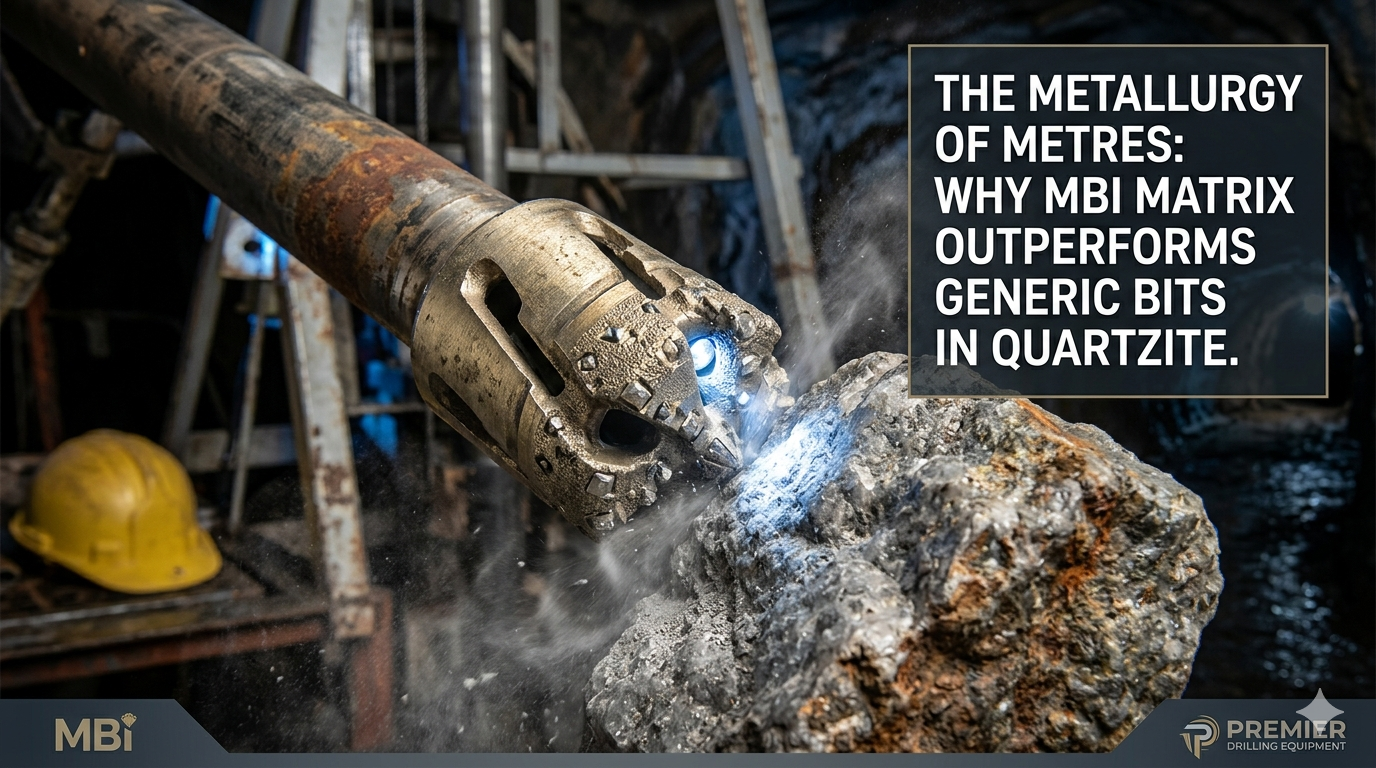
The Metallurgy of Metres: Why MBI Matrix Selection Outperforms Generic Bits in Quartzite
In the high-pressure environments of the Witwatersrand and the Northern Cape, the difference between a profitable shift and a costly delay often comes down to a few millimeters of specialized metallurgy. When drilling through highly abrasive, competent quartzite, “standard” impregnated diamond bits frequently fall victim to two extremes: premature wear or bit glazing.
To optimize for efficiency and ROI, we must move beyond the purchase price and look at the engineering synergy between the diamond grit and the metallic bond.
1. The Science of Controlled Erosion
The performance of an impregnated bit relies on a delicate “self-sharpening” cycle. As the bit rotates, the metallic matrix must erode at a rate that is perfectly synchronized with the wear of the synthetic diamonds.
- Generic Bits: Often utilize a “one-size-fits-all” bond. In hard quartzite, the matrix is often too hard, failing to erode and leaving the diamonds “polished” or glazed. Conversely, in abrasive ground, the bond may be too soft, releasing diamonds before they have performed their full cutting work.
- MBI Engineering: MBI matrix formulas are precision-engineered for specific rock hardness scales. By utilizing specialized metallurgical powders (tungsten carbide, cobalt, and iron), MBI ensures the matrix erodes just enough to expose fresh, sharp diamond points without shedding them prematurely.
2. Matrix Selection and ROP (Rate of Penetration)
In the South African mining landscape, quartzite presents a unique challenge: high quartz content that acts as a sandpaper-like abrasive on the tool’s kerf.
MBI’s selection process focuses on Crown Height and Matrix Hardness. A taller crown (e.g., 13mm or 16mm) in a high-performance MBI bit isn’t just about longevity; it’s about maintaining a consistent ROP throughout the life of the bit. While a budget-tier bit might start with a decent ROP, it often plateaus or drops significantly as the matrix fails to manage the heat and abrasion of the reef.
3. The TCO Model: Premium vs. Generic
When evaluating procurement, the Total Cost of Ownership (TCO) outweighs the initial invoice. Let’s look at the “Hidden Math” of a 1,500m iron ore or gold exploration programme.
| Feature | Generic “Budget” Bit | MBI Premium Bit |
|---|---|---|
| Initial Cost | R 4,500 | R 7,200 |
| Metres per Bit | 40m – 60m | 90m – 120m |
| Average ROP | 8 cm/min | 12 cm/min |
| Rod Pulls Required | 30 | 14 |
| Estimated Cost per Metre | R 112.50 | R 60.00 |
| By doubling the lifespan of the bit, we don’t just save on the tool itself—we drastically reduce the number of rod pulls. Every time the string is pulled to change a bit, the rig isn’t making metres, and your labor and fuel costs continue to climb. |
4. Maximizing Recovery in Complex Reefs
A superior matrix selection also impacts the quality of your data. A bit that cuts cleanly with less vibration ensures higher Core Recovery in fractured zones. MBI’s precision-machined waterways optimize fluid flow, ensuring that cuttings are removed instantly, preventing “re-grinding” which can lead to core wash or bit burnout.
Pro-Tip: Monitoring Bit Pressure
To prevent glazing in quartzite, ensure your bit is “drilling” and not “polishing.” If ROP drops, slightly increase the weight-on-bit (WOB) while maintaining consistent RPM to encourage matrix erosion and expose new diamonds.Engineering Predictability
At Premier Drilling Equipment, we believe that technical search signals and site-level performance are two sides of the same coin. Using MBI’s global R&D, we tailor our supply to the specific geological constraints of your site, ensuring that every metre drilled is a move toward a lower TCO.
Is your current bit selection glazing over in hard ground?
Contact the Premier Drilling technical team today for a site-specific matrix audit and let us help you optimize your drilling economics.