Evaluating Fluid Polymer Systems vs. Traditional Mud in Deep-Hole Diamond Drilling
In deep-hole diamond core drilling (>500\text{m}), the downhole environment escalates in complexity with every joint of rod added to the string. As the borehole deepens, rotational torque, mechanical drag, downhole temperatures, and hydrostatic pressures compound exponentially. In these high-stress environments, the primary defensive mechanism against premature tool failure, hole collapse, and poor core recovery is the drilling fluid program.
For exploration managers and drilling supervisors, the historical default has been traditional bentonite-based “mud” systems. However, the unique demands of high-rpm diamond coring in variable, fractured rock formations have highlighted the stark operational advantages of modern, high-performance liquid fluid polymer systems. Selecting the correct chemistry is not just about keeping the bit cool; it is a critical variable in protecting downhole assets and ensuring structural data integrity.
The Mechanics of Borehole Stabilization
The fundamental difference between traditional bentonite and modern liquid polymers lies in their physical behavior within the tight annular clearances typical of diamond core drilling.
The Bentonite Filter Cake Bottleneck
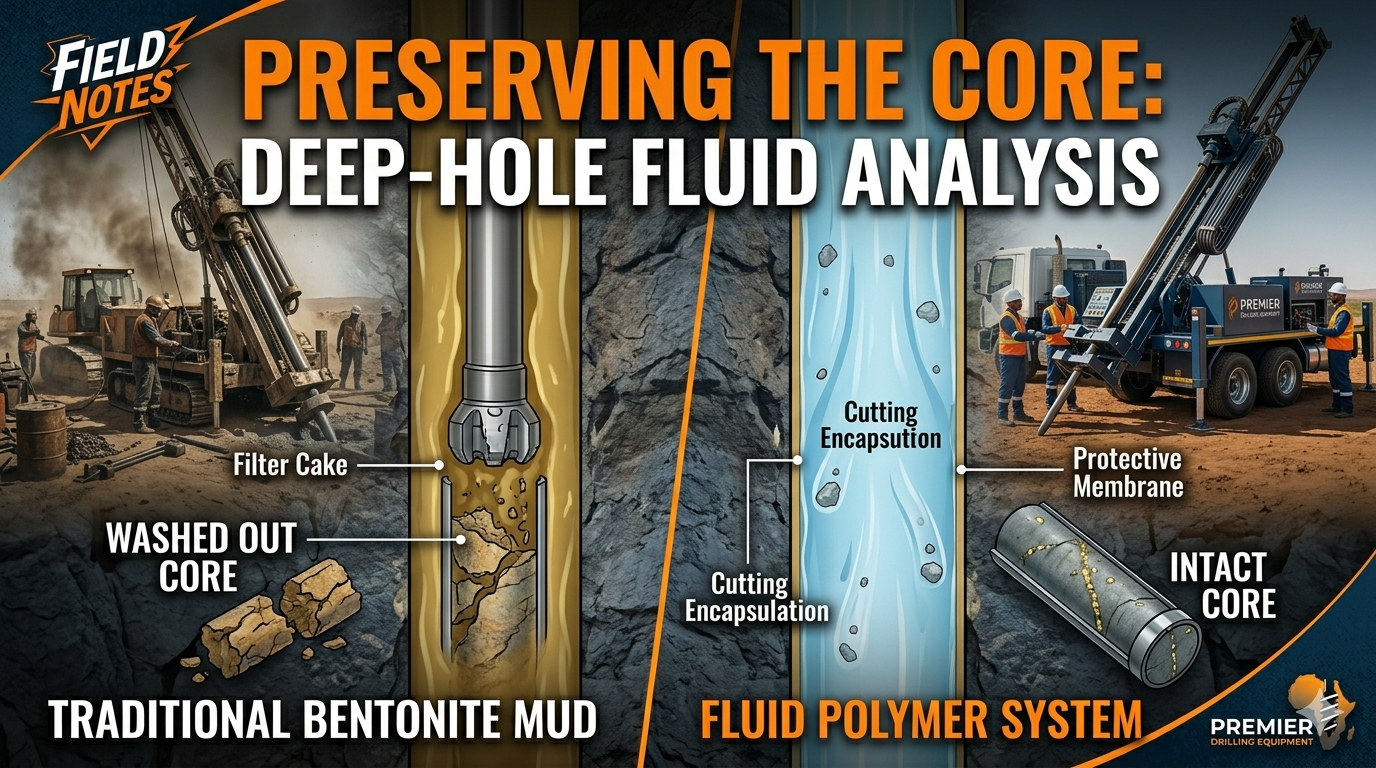
Bentonite is a sodium montmorillonite clay that relies on suspended solids to build a physical “filter cake” on the borehole wall. While highly effective in loose, high-permeability water-well or oilfield environments, this thick, solid-laden cake creates a severe bottleneck in a narrow diamond drilling annulus.
In a deep hole, a thick bentonite filter cake increases mechanical drag on the rotating rod string, escalates rotational torque, and drastically restricts fluid flow. If fluid velocity drops, the system’s ability to clear dense rock cuttings from the face drops with it, leading to a high risk of differential sticking or burnt diamond bits.
The Polymer Membrane Shield
Modern fluid polymer systems rely on high-molecular-weight, long-chain molecules that function with a low-solids or completely solids-free profile. Instead of building a thick wall of mud, polymers chemically bind to the host rock, encapsulating reactive clays and forming a micro-thin, low-friction protective membrane.
This thin-film stabilization prevents swelling and sloughing when drilling through highly fractured, water-sensitive, or shifting fault zones, all while maintaining maximum cross-sectional area in the annulus for clean, unimpeded fluid circulation.
Torque Reduction and Core Preservation
Deep diamond coring requires Surface Drill Rigs to supply massive hydraulic power and precise torque control to rotate thousands of kilograms of steel rod string at speeds often exceeding 800 rpm. If the drilling fluid fails to provide adequate lubricity, the resulting friction creates catastrophic structural stress.
Mitigating String Stress
Liquid polymers act as extreme-pressure lubricants. By coating the inner and outer diameters of the drill rods, they lower mechanical drag against the borehole wall and the inner tube. This drop in friction yields a measurable reduction in rotational torque, minimizing the risk of mid-hole rod failure, thread shearing, or structural rig wear-and-tear during deep runs.
Eliminating Hydraulic Washout
The ultimate objective of any exploration program is to pull intact, representative geological samples. In high-grade, narrow-vein zones, mineralisation is frequently concentrated in friable, broken quartz or soft, weathered saprolites.
Traditional bentonite muds require high pump pressures to move dense solids downhole, which can create a destructive hydraulic “jetting” action at the bit face. This velocity easily washes away soft, high-grade material, leaving geologists with empty core inner tubes or unrepresentative, degraded samples.
Solids-free polymer fluids operate smoothly under far lower hydraulic pressures. The polymer chains encapsulate the core sample as it enters the inner tube, protecting delicate structural features and maximizing core recovery rates in fractured or friable ore zones.
Operational Metrics Comparison
When optimizing a logistics and consumables budget for remote African drilling campaigns, comparing the physical handling and downhole performance of both fluid types highlights distinct operational realities:
| Operational Metric | Traditional Bentonite Mud | High-Performance Fluid Polymers |
|---|---|---|
| Physical Form & Packaging | Bulky, heavy multi-kilogram powder bags. | Concentrated liquid drums or small pails. |
| Logistical Footprint | High (Requires tons of product transport and storage space). | Low (Minimal weight; easily transportable to remote setups). |
| Mixing & Hydration Time | Slow (Requires mechanical shearing and hydration aging). | Near-Instant (Disperses rapidly in water with basic agitation). |
| Borehole Wall Deposit | Thick filter cake (Increases torque and drag risks). | Micro-thin, slippery chemical membrane. |
| Cutting Management | Relies on high viscosity to suspend heavy solids. | Encapsulates and coats cuttings for efficient settling. |
| Annular Clearance Impact | Restrictive in narrow wireline configurations. | Unrestricted fluid velocity and lower pump pressures. |
System Synergies: Protecting Your Tooling Investment
A properly managed fluid polymer program creates a protective environment for every downhole component. By keeping the borehole clean, stable, and heavily lubricated, operators directly extend the service life of premium consumable core drilling products.
- Diamond Core Bits: Fluid polymers prevent the accumulation of abrasive rock flour on the bit matrix. This ensures the matrix strip occurs uniformly, exposing new diamonds evenly and maximizing the bit’s lifespan.
- Wireline Core Barrels: Lowering downhole solids prevents sand-locking of the inner tube assembly, guaranteeing that the core landing indicator seats properly and latching mechanisms deploy cleanly on every run.
- Drill Rod Threads: Enhanced lubricity minimizes mechanical shock and vibrations traveling up the string, drastically reducing downhole thread galling and premature pin failures.
Conclusion: Engineering the Fluid Program
Deep-hole diamond drilling leaves no margin for chemical guesswork. While traditional bentonite muds remain a viable tool for coarse, top-hole overburden or massive water-well projects, they present severe operational constraints inside the narrow, high-rpm environment of deep exploration coring.
Transitioning to high-performance fluid polymer systems allows drilling operations to drastically compress rotational torque, maintain exceptional borehole stability, and eliminate the hydraulic washout of vital ore zones. Ultimately, reducing downhole friction and streamlining site logistics provides a direct economic advantage, driving down the overall cost-per-metre while ensuring peak core recovery.
To explore further technical field insights regarding downhole stabilization, asset optimization, and regional exploration logistics, return to our main Field Notes hub.
Consult with Our Technical Team
Maximizing the depth capabilities of your fleet requires matching specific geological challenges with the exact fluid chemistry and hardware configuration. Contact Premier Drilling Equipment today to consult on a tailored consumables program, review technical product data sheets, or request a precise quotation for your upcoming drilling campaign.