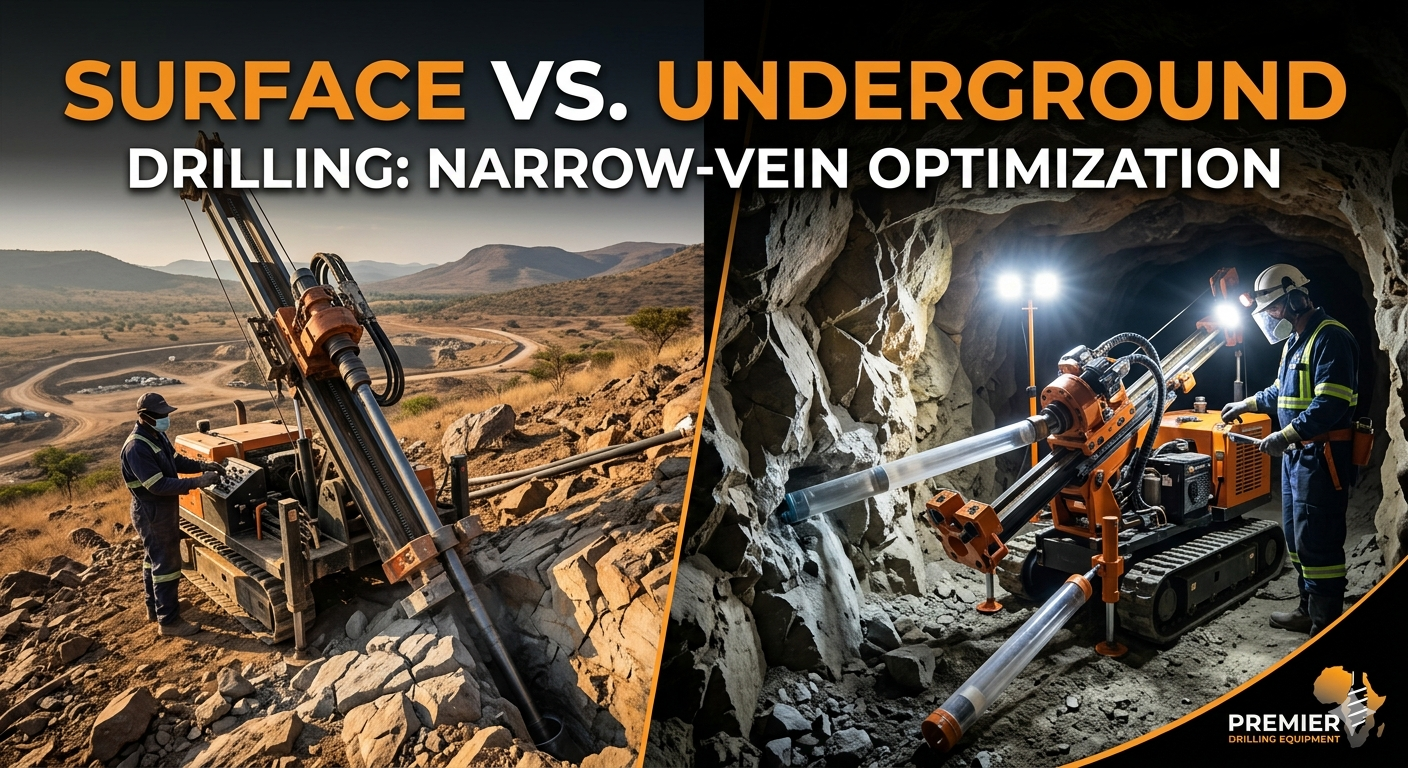
Surface vs. Underground Drill Rigs: Choosing the Optimal Footprint for Narrow-Vein Gold Exploration
In narrow-vein gold exploration across Sub-Saharan Africa’s greenstone belts and structural shear zones, geological precision is directly tied to operational profitability. Unlike massive, low-grade deposits where broad spacing is acceptable, narrow-vein architectures—often measuring under two metres in width—demand hyper-targeted drilling campaigns. A variance of just a few degrees in hole deviation can mean the difference between intersecting a high-grade pay shoot or drilling entirely into barren country rock.
For exploration managers, project geologists, and operations directors, the primary strategic decision begins at the surface level: Should the project deploy surface-based core rigs, or is it more efficient to establish underground drilling stations?
Balancing developmental costs, structural accessibility, and environmental footprint requires a deep dive into the engineering realities of both methods.
The Geometry of Narrow-Vein Targets
Narrow-vein gold deposits are notoriously challenging due to their structural complexity. They are frequently hosted in highly deformed, faulted, and fractured strata, exhibiting sharp variations in strike, dip, and thickness.
To map these resources accurately for resource estimation and subsequent mine planning, exploration teams require high-density drilling grids. The primary objective is to optimize the angle of intersection, aiming as close to perpendicular to the vein structure as possible. Achieving this optimization requires a careful analysis of the physical space—the footprint—occupied by the drilling operations.
Surface Core Drilling: Deep Targets and Regional Flexibility
Surface exploration remains the bedrock of early-stage project development and deep-target definition. When stepping out from known mineralisation or chasing deep extensions of a shear zone, Surface Drill Rigs offer a broad operational reach that can test large regional structures before underground infrastructure exists.
Terrain and Mobilisation Challenges
Deploying heavy surface diamond core rigs across remote African terrains requires significant infrastructure. Constructing access roads, clearing drill pads, and establishing sumps for fluid management require a substantial physical footprint. In rugged or ecologically sensitive areas, this environmental footprint translates directly into higher rehabilitation costs and extended permitting timelines.
The Problem of Deep-Hole Deflection
When targeting narrow veins at depths exceeding 500 metres from the surface, hole deviation becomes a major operational hurdle. In highly dipping or anisotropic formations, the drill string naturally tends to follow the bedding planes or structural planes of weakness.
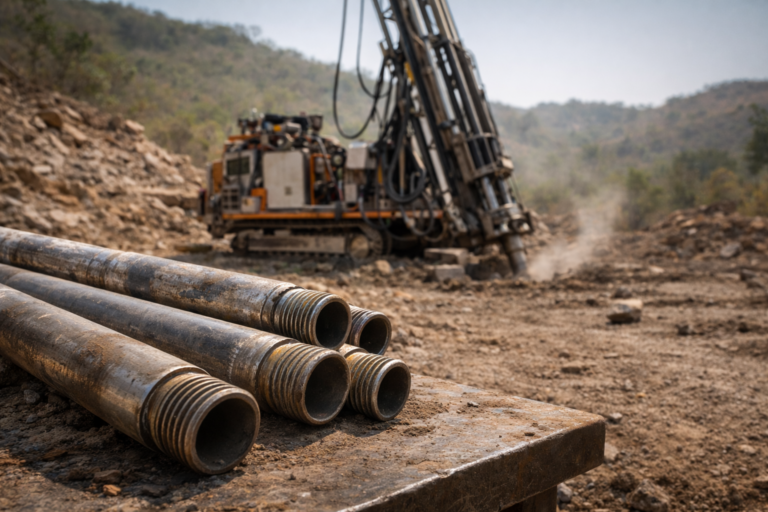
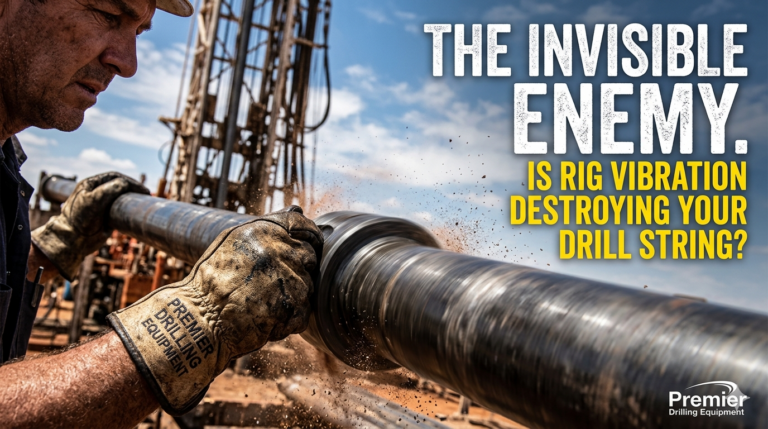
Maintaining target trajectory over long distances requires constant downhole surveying, the deployment of heavy-duty, premium-threaded drill rods to withstand torsional stress, and the implementation of precise directional drilling tools or wedging procedures. Every instance of structural correction adds to the time-per-metre cost and slows down the overall exploration programme.
Underground Drilling: Precision from Tight Structural Constraints
As an exploration project progresses toward advanced feasibility, or when operating within an active mining lease, moving the drilling footprint underground changes the operational dynamic entirely. This is where compact, specialized Underground Drill Rigs become indispensable.
Minimising the Footprint via Development Cubbies
Underground core drilling operates within strict dimensional constraints. Instead of expansive clearings, underground rigs are deployed from standard development drives or purposely blasted drill cubbies. This approach completely eliminates the surface environmental footprint, road construction requirements, and weather-dependent delays.
Optimising Intersection Angles
By placing the rig hundreds of metres closer to the target zone, the length of the required drill hole is dramatically reduced. Shorter holes offer several distinct technical advantages:
- Reduced Hole Deviation: With shorter distances to travel, the bit has less opportunity to wander off-target, ensuring precise interception of narrow veins.
- Higher Core Recovery: Drilling through less barren country rock reduces the risk of structural failure downhole, keeping core recovery rates close to 100% in vital mineralised zones.
- Rapid Data Turnaround: Shorter holes mean faster completion times per hole, allowing geologists to adapt the drilling grid in real time based on incoming core logs.
Technical Parameter Comparison
When selecting the optimal fleet footprint for an active narrow-vein campaign, exploration managers must balance engineering performance against logistical cost:
| Operational Metric | Surface Core Drilling | Underground Core Drilling |
|---|---|---|
| Physical Setup Footprint | Large (Requires pads, sumps, and access tracks). | Highly Compact (Confined to development drives/cubbies). |
| Average Hole Lengths | Typically deep (500\text{m} – 1500\text{m}+ for deep extensions). | Short to Medium (50\text{m} – 400\text{m} for targeted definitions). |
| Hole Deviation Risk | High (Requires active management and premium consumables). | Low to Moderate (Shorter run lengths preserve trajectory). |
| Rig Mobility & Setup Time | Slower (Weather-dependent, complex pad-to-pad moves). | Fast (Highly mobile, modular systems tailored for tight spaces). |
| Environmental Impact | High initial surface disturbance; requires rehabilitation. | Negligible surface impact; utilizes existing underground infrastructure. |
Operational E-E-A-T: The Role of Consumables and Fluids
Regardless of whether the drill footprint is established on a surface ridge or inside a deep development drive, the success of a narrow-vein exploration programme depends on the interaction between the bit and the rock face.
Rigidity in the String
To combat hole deflection in highly fractured strata, the selection of the drill string is critical. Utilizing high-tensile, precision-machined drill rods minimizes mid-hole flexing. This is particularly vital when executing high-angle intersections from underground cubbies where space for handling long rod strings is restricted.
Core Barrel Assembly Integrity
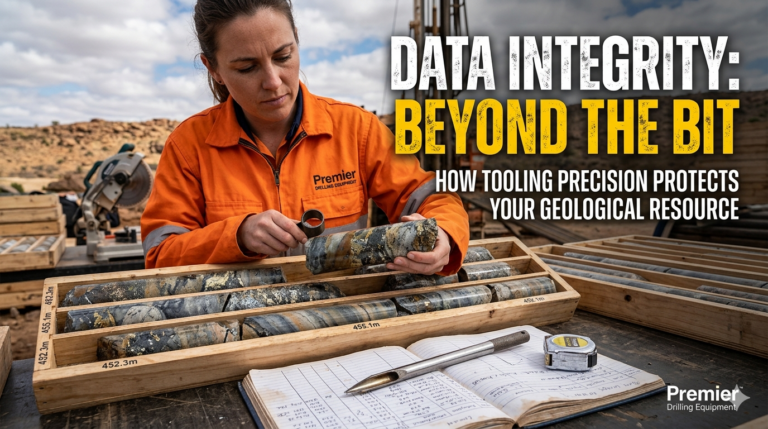
In narrow-vein configurations, gold is often concentrated in highly altered, friable, or shattered quartz zones. If the core barrel configuration allows inner-tube vibration or hydraulic wash-out, the high-grade material can easily be lost or ground away, leaving the geologist with an empty inner tube or an inaccurate sample. Deploying premium wireline core barrels with heavy-duty core lifters ensures that the critical contact zone of the vein is recovered intact.
Fluid Management
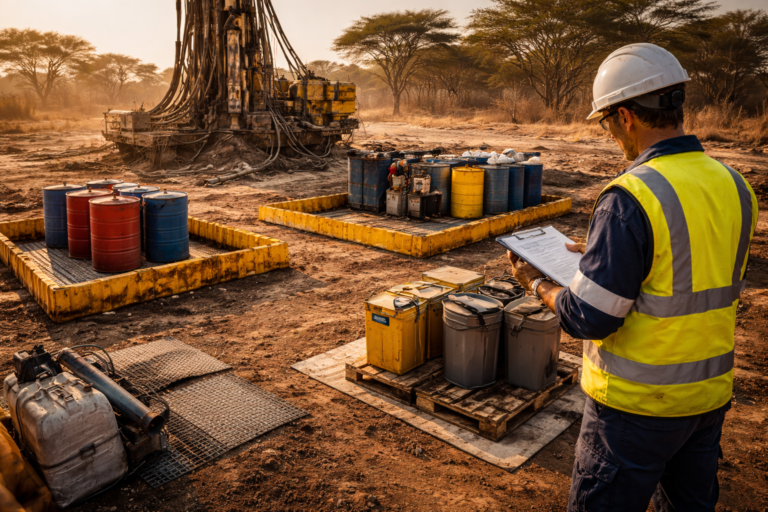
In fractured formations, fluid loss can cause total hole failure or rod stucking. The implementation of advanced fluid polymer systems helps to stabilize the borehole wall, control fluid viscosity, and ensure efficient cutting removal—even when drilling from underground setups where water supply and drainage infrastructure must be tightly controlled.
Conclusion: Balancing the Strategy
Choosing between a surface and an underground drilling footprint is not merely a logistical decision; it is a structural economic strategy.
For early-stage greenfield exploration or broad regional asset mapping, surface rigs provide the long-range flexibility needed to prove up initial resource models. However, when the focus shifts to defining the structural complexities of narrow, high-grade veins, moving the operation inside via compact underground rigs minimizes hole lengths, mitigates deviation risk, and lowers the ultimate cost-per-gram of discovered gold.
To explore further technical field insights regarding core recovery optimization, rig maintenance, and regional mining logistics, return to our main Field Notes hub.
Consult with Our Technical Specialists
Optimizing your drilling footprint requires matching specific geological targets with the right fleet power and consumable configurations. Contact Premier Drilling Equipment today to discuss your upcoming exploration campaign and review high-efficiency rig specifications tailored for tough African environments.