Thermal Management in Hydraulic Systems: Operating VersaDrill Rigs in Extreme African Heat
Introduction: Why Heat Destroys Drilling Uptime
Few operational problems erode drilling productivity faster than hydraulic overheating.
A rig may begin a shift operating normally, only to become sluggish, inefficient, and unstable after several hours under severe heat load. Hydraulic responsiveness deteriorates. Pressure consistency fluctuates. Cooling systems struggle to dissipate thermal buildup. Eventually, drilling slows or stops entirely.
In remote African exploration environments, this problem is common.
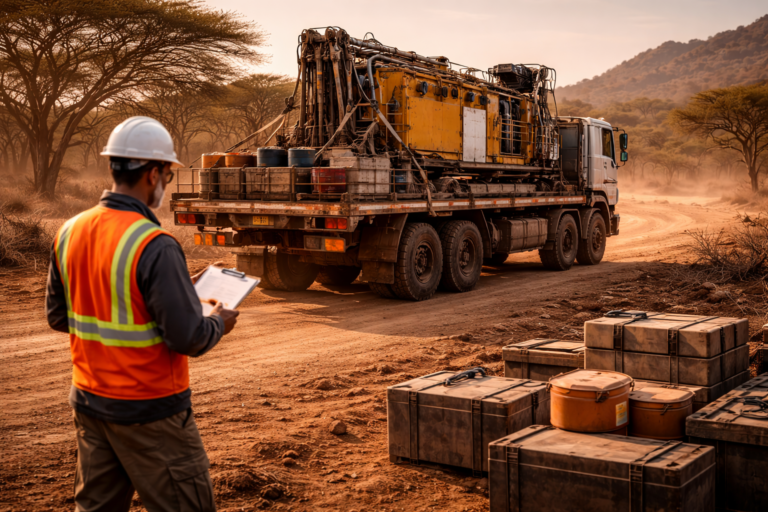
From arid Southern African campaigns to high-temperature desert conditions associated with the Kalahari and Sahel, elevated ambient temperatures place sustained thermal stress on drilling equipment.
For VersaDrill Rigs, unmanaged thermal load rarely produces immediate catastrophic failure.
Instead, problems develop progressively.
Fluid viscosity deteriorates. Hydraulic efficiency declines. Seals harden or swell. Heat exchangers lose cooling performance. Pumps operate under increasing mechanical strain until productivity begins to collapse.
The result is more than mechanical inconvenience.
It becomes an economic problem driven by downtime, delayed meterage, rising fuel consumption, and avoidable Non-Productive Time (NPT).
Why Hydraulic Systems Fail in Extreme African Heat
Ambient Temperature and Thermal Load
Hydraulic systems continuously generate heat.
Under normal operating conditions, this heat dissipates through circulation and cooling systems.
Extreme ambient temperatures complicate this balance.
In remote drilling environments, rigs operate under:
- High daytime temperatures
- Dust-heavy airflow conditions
- Long operational duty cycles
- Limited cooling opportunities
- Continuous hydraulic loading
Heat accumulates progressively.
Even when components remain mechanically functional, elevated surrounding temperatures reduce cooling efficiency and increase internal thermal stress.
The result is cumulative degradation.
Overheating rarely starts at failure.
It starts with rising thermal load.
Hydraulic Fluid Viscosity Breakdown
Hydraulic performance depends on fluid behaviour.
Hydraulic Fluid Viscosity determines lubrication performance, heat transfer efficiency, sealing quality, and pressure stability.
As temperature rises, viscosity decreases.
This creates several operational problems simultaneously:
- Reduced lubrication performance
- Increased internal leakage
- Lower sealing efficiency
- Reduced energy transfer efficiency
- Higher wear rates
Hydraulic oil subjected to prolonged heat also experiences fluid shearing.
Under repeated pressure cycles, molecular degradation alters performance characteristics, reducing stability and consistency.
Once viscosity drops excessively, components begin operating under inadequate lubrication conditions.
Wear accelerates.
Heat generation increases further.
The cycle compounds itself.
Hydraulic Pressure Instability
Heat affects responsiveness as much as durability.
As viscosity deteriorates, systems struggle to maintain Hydraulic Pressure Stability.
Operators often notice:
- Delayed control response
- Sluggish rig movements
- Reduced feed consistency
- Pressure fluctuation
- Irregular hydraulic behaviour
Pressure instability reduces drilling precision.
In severe cases, feed control becomes inconsistent, increasing mechanical stress across the drilling system.
Pump performance also deteriorates.
Under elevated temperature conditions, cavitation risk increases when fluid properties decline.
Microscopic vapour formation damages pump surfaces and reduces hydraulic efficiency further.
Thermal Management in VersaDrill Rigs
Why Cooling Systems Matter
Effective Thermal Management depends heavily on cooling efficiency.
Hydraulic systems rely on heat exchangers to remove accumulated thermal load before degradation escalates.
Cooling systems influence:
- Fluid temperature stability
- Pressure consistency
- Pump efficiency
- Seal reliability
- Component lifespan
When cooling performance deteriorates, system-wide reliability declines.
Minor airflow restrictions often produce disproportionately large performance losses.
Managing Heat Exchanger Performance
Heat exchangers perform poorly when contaminated.
African exploration environments frequently expose rigs to:
- Fine dust loading
- Airborne debris
- Mud contamination
- Restricted airflow conditions
Over time, heat exchanger fins clog.
Airflow drops.
Cooling performance decreases.
Common warning signs include:
- Rising operating temperatures
- Slower hydraulic response
- Higher fuel consumption
- Reduced drilling efficiency
Routine inspection should prioritize:
- Cleaning exchanger fins
- Airflow verification
- Cooling fan inspection
- Contamination removal
Preventive cleaning costs considerably less than overheating-driven downtime.
Seal and Hose Reliability
Heat damages more than fluids.
Seal Degradation becomes increasingly likely under thermal cycling.
Repeated heating and cooling causes:
- Seal expansion
- Hardening
- Loss of elasticity
- Leakage development
Similarly, hydraulic hoses deteriorate through prolonged exposure to heat and pressure cycling.
Common warning signs include:
- Hose brittleness
- Swelling
- Surface cracking
- Connection seepage
Small leaks often signal larger thermal problems.
Ignoring them increases failure probability.
How to Detect Thermal Stress Before Hydraulic Failure
Most overheating problems announce themselves before operational shutdown occurs.
Crews should monitor performance indicators continuously rather than waiting for failure.
Thermal Stress Diagnostic Checklist
Watch for:
- Elevated operating temperatures beyond normal ranges
- Sluggish hydraulic response during feed or mast movement
- Pressure fluctuation during operation
- Reduced rig responsiveness under sustained load
- Excessive fuel consumption caused by declining efficiency
- Hydraulic fluid discoloration or burnt appearance
- Hose swelling or brittleness
- Leakage around seals and fittings
- Abnormal pump noise suggesting cavitation or wear
- Reduced cooling efficiency during long shifts
These indicators often appear gradually.
Treating them early reduces downtime risk substantially.
The Economics of Thermal Discipline vs Rig Downtime
Hydraulic overheating becomes expensive quickly.
Consider a simplified comparison.
| Performance Area | Reactive Maintenance | Preventive Thermal Management |
| Rig downtime | High | Reduced |
| Crew idle time | Significant | Minimal |
| Hydraulic repair costs | High | Controlled |
| Fuel efficiency | Reduced | Stable |
| Component life | Shortened | Extended |
| Maintenance costs | Reactive and unpredictable | Planned |
| NPT | Elevated | Reduced |
| Cost per meter drilled | Higher | Lower |
Under a reactive model, crews often continue drilling until failure occurs.
Once overheating escalates, the consequences typically include:
- Unplanned stoppages
- Emergency repairs
- Replacement components
- Lost production time
- Escalating standby costs
By contrast, disciplined thermal control reduces operational variability.
Predictable systems reduce surprises.
Prevention Strategy: Building a High-Heat Drilling Program
Preventive Maintenance Discipline
Maintenance should anticipate failure rather than react to it.
Routine inspection intervals should prioritize:
- Hydraulic oil condition
- Hose inspection
- Seal performance
- Pump efficiency
- Cooling system cleanliness
Minor abnormalities should trigger intervention early.
Cooling System Management
Cooling systems require continuous attention.
Crews should prioritize:
- Heat exchanger cleaning
- Airflow verification
- Fan inspection
- Dust removal
- Cooling pathway inspection
Restricted airflow is one of the most common overheating contributors in Remote Drilling Operations.
Fluid Management
Hydraulic oil quality determines system performance.
Programs should include:
- Oil monitoring
- Contamination control
- Filtration maintenance
- Temperature tracking
- Fluid replacement planning
Degraded oil increases thermal stress.
Healthy oil stabilizes performance.
Data-Led Maintenance
Reliable drilling programs monitor trends.
Useful indicators include:
- Operating temperature drift
- Pressure consistency
- Fuel consumption
- Hydraulic responsiveness
- Maintenance frequency
Small changes often signal larger failures developing.
Thermal problems rarely emerge without warning.
Conclusion
VersaDrill Rigs operating in extreme African conditions depend on disciplined Thermal Management to maintain reliability.
Elevated ambient temperatures accelerate hydraulic degradation through reduced Hydraulic Fluid Viscosity, declining cooling efficiency, Seal Degradation, and worsening Hydraulic Pressure Stability.
These failures rarely occur suddenly.
They develop progressively through unmanaged heat, contamination, poor cooling performance, and inconsistent Preventive Maintenance.
For drilling contractors, mechanics, and exploration managers focused on Downtime Reduction, the economics are straightforward.
Preventing overheating costs considerably less than repairing a failed hydraulic system in a remote drilling environment.
Thermal discipline is not simply maintenance.
It is operational continuity.