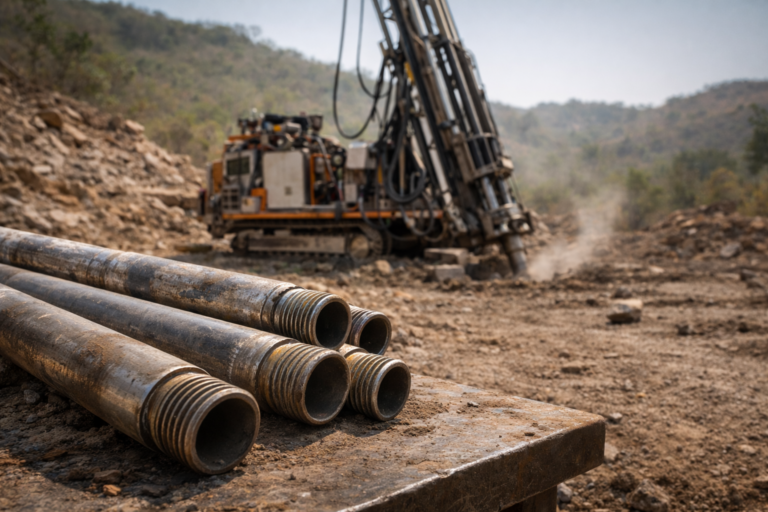
The True Cost of a Snap – Why Cheap Drill Pipe is a False Economy

The True Cost of a Snap – Why Cheap Drill Pipe is a False Economy

You’re 300 metres down in a remote stretch of the Northern Cape. The rig is humming, the penetration rate is steady, and then—silence. Or worse, the sudden, violent decompression of torque that every driller dreads. You pull the string, only to find a clean snap at the weld of the lead pipe. In that moment,…
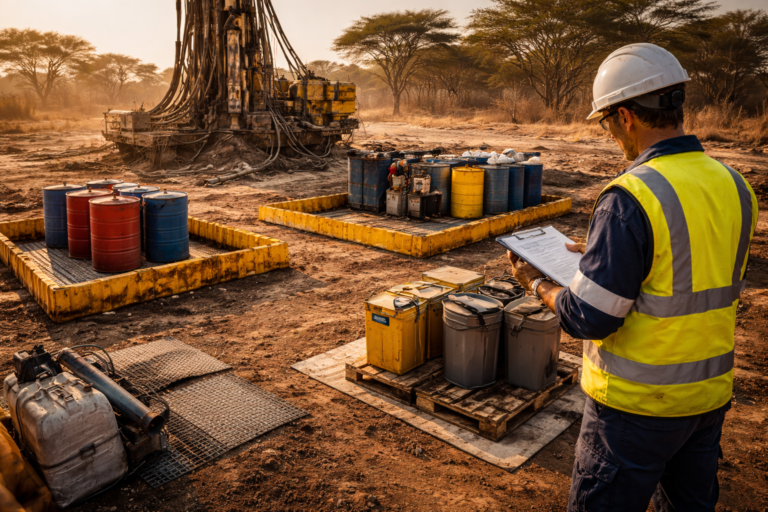
Environmental Risk Beyond Spill Kits: Building a Proactive Drill Site Control System

Environmental Risk Beyond Spill Kits: Building a Proactive Drill Site Control System

Most drill sites have spill kits. Absorbent pads.Granular absorbent.A disposal drum. That is response equipment. It is not a system. Environmental risk on drill sites rarely begins with a dramatic fuel spill. It develops from routine activity: In remote and highly regulated mining environments, drill site environmental management Africa cannot rely on reactive cleanup. It…

Predictive Maintenance Signals on Drill Sites: What Early Failure Patterns Actually Look Like

Predictive Maintenance Signals on Drill Sites: What Early Failure Patterns Actually Look Like

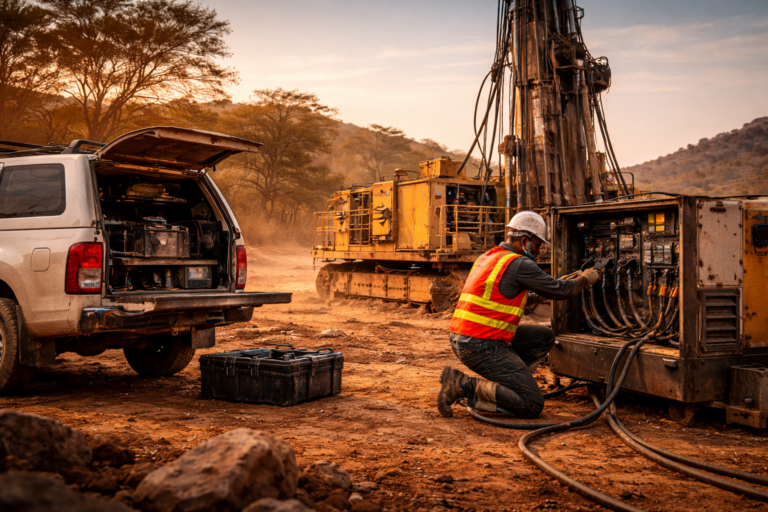
Most drill rig failures do not begin with a loud mechanical snap. They begin with a vibration that feels slightly different.A torque reading that drifts unexpectedly.A bearing housing that runs a few degrees hotter than usual.Hydraulic oil that darkens gradually. Reactive maintenance waits for visible failure. Engineering-led maintenance detects signal drift before the failure event….

Drill Rod Metallurgy Explained: Why Steel Grade and Heat Treatment Determine Failure Rates

Drill Rod Metallurgy Explained: Why Steel Grade and Heat Treatment Determine Failure Rates

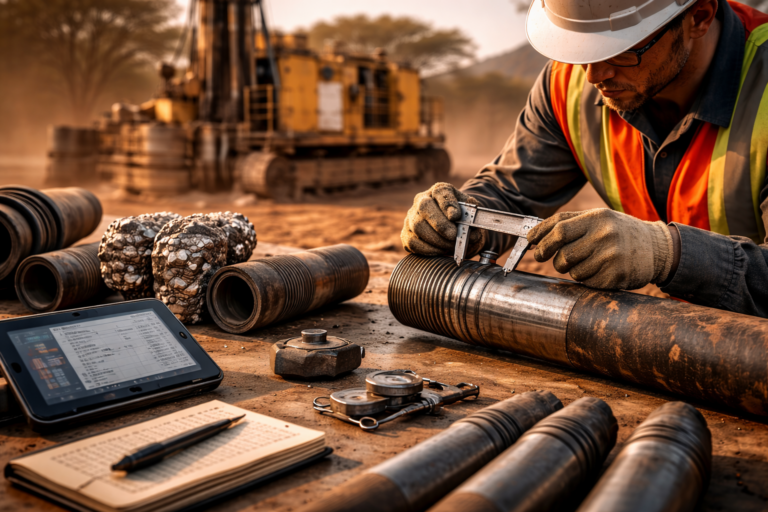
Drill rod failure is often described as “bad luck.” A snapped rod.A stripped thread.An unexpected string retrieval. In reality, most drill rod failures are not random. They are metallurgical. Procurement decisions frequently focus on diameter, length, connection type, and price. Yet beneath those visible specifications lies the determining factor in fatigue resistance and service life:…

Downhole Data Without Reliable Connectivity: Designing an Offline-First Instrumentation Workflow

Downhole Data Without Reliable Connectivity: Designing an Offline-First Instrumentation Workflow

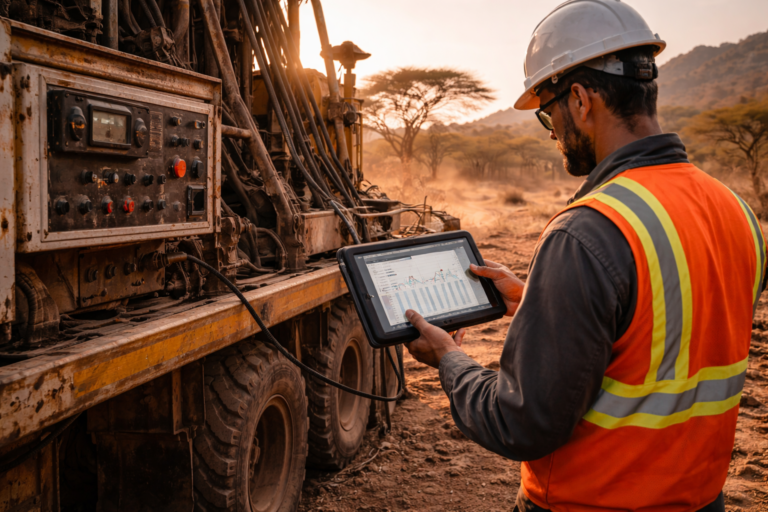
Modern drill programs are increasingly data-driven. RPM, torque, penetration rate, recovery percentages, bit wear patterns, shift productivity — all of it feeds dashboards, reports, and cost-per-metre models. Yet many drilling sites across remote regions operate under a dangerous assumption: That connectivity will always be available. In much of the continent, LTE drops without warning. Satellite…

Remote Mobilisation Playbook: Planning Drill Campaign Logistics in Harsh African Terrain

Remote Mobilisation Playbook: Planning Drill Campaign Logistics in Harsh African Terrain

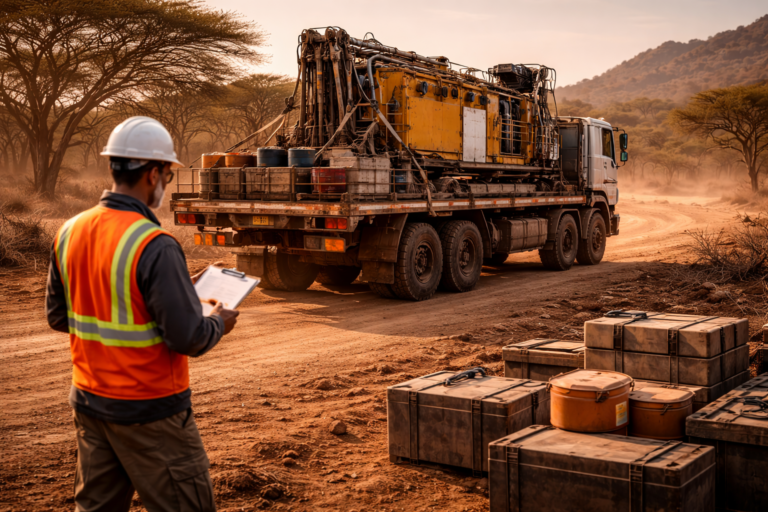
Mobilisation is often described as a transport phase. Load the rig.Move it to site.Start drilling. In reality, across much of the continent, remote drilling logistics Africa operations depend on is not a transport exercise — it is a continuity engineering exercise. Campaigns are delayed not because rigs cannot drill, but because: Mobilisation decisions made before…

Consumables Lifecycle Engineering: When to Replace, Rotate or Repair to Protect Cost-Per-Metre

Consumables Lifecycle Engineering: When to Replace, Rotate or Repair to Protect Cost-Per-Metre

On many drill sites, consumables are managed with a simple rule: Use it until it fails. Replace it when it breaks. At first glance, that approach appears economical. But in mineral exploration and production drilling — particularly across remote African operations — reactive replacement increases non-productive time, destabilises cost-per-metre, and compounds logistics risk. Drill rods,…

Technician Response Time vs. Downtime Cost: Why Service SLAs Matter More Than Product Brochures

Technician Response Time vs. Downtime Cost: Why Service SLAs Matter More Than Product Brochures

When mines evaluate drilling suppliers, the comparison usually starts with: Very few procurement discussions begin with a harder operational question: What happens when the rig stops? In African mining environments — where logistics are complex, sites are remote, and freight delays are common — drilling equipment technician response time often has a greater impact on…

Energy Instability and Drill Performance: Operating Under Generator and Load-Shedding Constraints in African Mining

Energy Instability and Drill Performance: Operating Under Generator and Load-Shedding Constraints in African Mining

In many African mining operations, stable grid power is the exception — not the norm. Load shedding, remote exploration camps, seasonal grid interruptions, and reliance on diesel generators are operational realities. Yet while drill programs obsess over bit selection, RPM discipline, torque stability, and cost-per-metre control, one critical variable often goes unexamined: Power instability. Unstable…

Hole Deviation and String Alignment: The Silent Driver of Rod Failure, Recovery Loss, and Rising Cost-Per-Metre on African Drill Sites

Hole Deviation and String Alignment: The Silent Driver of Rod Failure, Recovery Loss, and Rising Cost-Per-Metre on African Drill Sites

A hole starts clean. Collar alignment looks acceptable. The first 60 metres advance without incident. Penetration rate is stable. Torque sits inside its normal range. By 140 metres, breakout feels slightly tighter. Torque begins rising progressively at similar depths. Vibration changes tone under rotation. Core recovery becomes inconsistent through fractured intervals. At 220 metres, a…