Non-Productive Time in African Drill Programs: Where It Really Comes From — and How to Reduce It
A weekly operations report shows 28 percent downtime.
The summary line reads: “Ground conditions and logistics.”
The assumption is that instability, fractured zones and remote supply constraints are unavoidable. The programme continues. Another week closes at 26 percent non-productive time.
But when the downtime events are broken down, patterns emerge:
- Repeated stuck string events in similar lithologies
- Rod breakout failures after torque spikes
- Delayed parameter adjustments in fractured zones
- Waiting for consumables that should have been forecast
- Water shortages during known peak intervals
Non productive time drilling Africa operations experience is rarely random. It is patterned. And patterns can be managed.
What Counts as Non-Productive Time?
Non-productive time (NPT) is any period where the rig is not advancing planned metres.
This includes:
- Stuck string recovery
- Fishing operations
- Rod failures
- Thread damage breakout delays
- Hole collapse remediation
- Re-drilling unstable intervals
- Equipment breakdown
- Waiting for water deliveries
- Waiting for consumables
- Weather shutdowns
- Crew transition inefficiencies
Some downtime is unavoidable. Severe weather events, major geological surprises or external logistics interruptions may fall outside operational control.
But much of what is categorised as “ground conditions” is actually preventable downtime.
Distinguishing unavoidable downtime from preventable downtime is the first step in drilling downtime reduction.
The Real Sources of NPT in African Operations
Mechanical Instability
Mechanical instability often appears as a geological problem.
Early signs include:
- Rising torque in fractured zones
- Increased vibration during rotation
- Declining recovery percentages
- Inconsistent penetration rates
If parameters are not adjusted promptly, these signals escalate into stuck string events, thread damage, core barrel wear, and premature bit replacement.
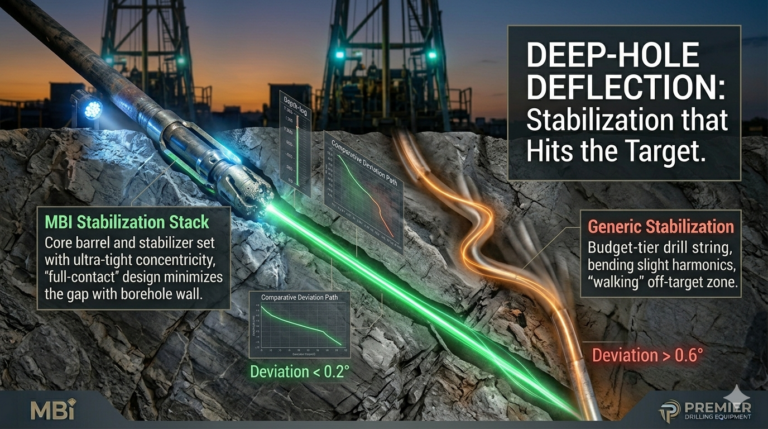
Mechanical instability drilling issues often originate from delayed response rather than unexpected geology.
Poor Consumable Planning
Consumables are frequently blamed only when they fail, but inconsistent stock management creates downtime long before visible failure.
Common issues include:
- Incorrect bit selection for formation
- Insufficient reaming shells in inventory
- Delayed rod replacement
- Inadequate thread compound stock
- Freight delays due to poor forecasting
Correctly specified and forecast consumable core drilling products reduce downtime risk by ensuring compatibility and availability.
Consumable gaps are preventable.
Ground Response Mismanagement
Fractured zones are predictable in many African formations. When crews maintain aggressive RPM and feed pressure in unstable intervals, instability escalates.
Common responses that increase NPT include:
- Forcing penetration through shear zones
- Ignoring early torque spikes
- Extending run length in broken ground
- Delaying viscosity adjustments
Ground does not cause downtime on its own. Poor response to ground behaviour does.
Water and Fluid Instability
Insufficient circulation leads to cuttings accumulation, increased back-pressure, wall collapse, and recovery loss. Water shortages due to poor planning compound instability.
Water management errors frequently appear as “ground collapse” events in reports, when they are actually fluid discipline failures.
Logistics and Remote Operations
Remote sites introduce supply chain variability. Freight timelines may stretch. Boreholes may fluctuate seasonally. Replacement components may require long lead times.
However, remote risk is predictable. Sites that maintain buffer stock, forecast consumption accurately and build contingency plans experience significantly lower non productive time drilling Africa programmes otherwise accept as unavoidable.
The Hidden Cost of Re-Drilling
Re-drilling unstable intervals often appears minor in isolation. But consider a 1,500 metre programme with 12 percent re-drilling due to recovery loss and instability. That equates to 180 additional metres.
If average penetration is 2.5 metres per hour and rig cost is calculated per operating hour, those additional metres inflate cost per meter drilling significantly.
Re-drilling compounds labour hours, fuel consumption, consumable wear, reporting timelines, and camp overhead.
A 10 percent recovery loss in critical zones can increase total programme cost materially. Small inefficiencies multiply across the entire campaign.
How to Reduce NPT Systematically
Reducing NPT requires structure, not reaction.
Log and Categorise Every Downtime Event
Every downtime event should be categorised as mechanical, consumable, ground response, fluid instability, logistics, weather, or human factor. Root cause analysis drilling methods reveal patterns within weeks when logging is disciplined.
Without categorisation, reports hide patterns.
Standardise Parameter Adjustment Protocols
When entering fractured ground: reduce RPM, adjust feed pressure, monitor torque closely, shorten run length, and stabilise fluid viscosity. Parameter response should be procedural, not improvised.
Standardisation reduces instability escalation.
Assign Mechanical Ownership
Downtime often increases when no one owns mechanical integrity. Assign responsibility for thread inspection, torque discipline, fluid monitoring, consumable forecasting, and daily instability reporting.
Ownership increases accountability and reduces recurring failures.
Consumable Strategy and Forecasting
Forecast based on historical wear rates, planned metre targets, known unstable intervals, and freight lead times.
Structured inventory management of consumable core drilling products prevents waiting periods that inflate downtime. Consumables should never arrive after failure. They should arrive before forecast depletion.
Rig Suitability Matters
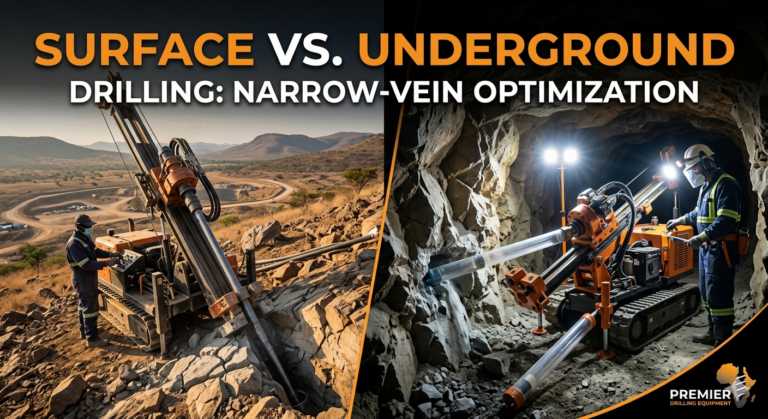
In shallow or unstable formations, improper configuration increases vibration and misalignment. Appropriately matched geotechnical drill rigs reduce instability risk in near-surface or fractured conditions.
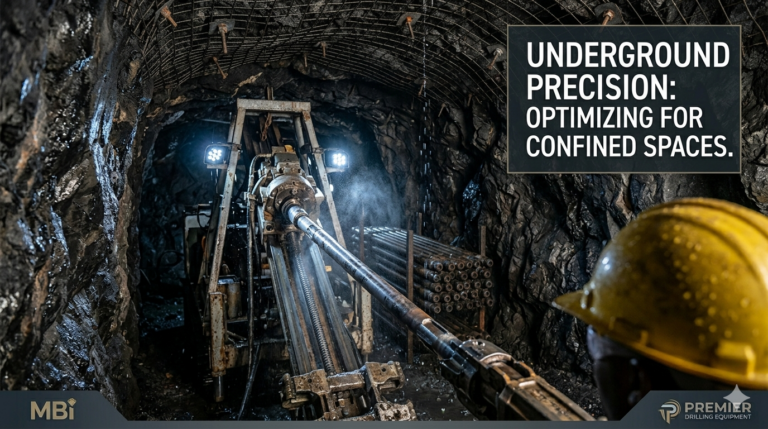
In confined underground environments, suitable underground drill rigs support stable setup and controlled torque management. Incorrect rig configuration increases mechanical stress and contributes directly to downtime.
Build an NPT Dashboard
A simple NPT dashboard provides clarity. Track weekly percentages across categories:
- Mechanical instability
- Consumables
- Ground response
- Fluid management
- Logistics
- Weather
- Human factors
After two to three weeks of consistent logging, patterns emerge. If 40 percent of downtime falls under mechanical instability, response protocols must change. If logistics contributes heavily, buffer strategies must improve. Data removes assumption.
The African Context
African drill programmes often operate in remote terrain, with extended freight lead times, limited immediate technical support, and variable environmental conditions.
In centralised markets, rapid replacement and technical intervention may be available within hours. In remote African operations, response windows are longer. This makes proactive control more important.
Non productive time drilling Africa operations experience carries greater cumulative cost because recovery from failure takes longer. Prevention is more valuable than correction.
NPT Is a Management Signal
NPT is not bad luck. It is a signal.
Repeated stuck string events signal parameter discipline failure. Recurring rod failures signal inspection gaps. Consumable delays signal forecasting weaknesses. Water-related collapse signals fluid mismanagement.
When programmes categorise, analyse and respond systematically, NPT decreases predictably. Reducing NPT stabilises cost per meter drilling, improves drill program efficiency and strengthens operational confidence.
Downtime patterns can be controlled.
Frequently Asked Questions
What is considered non-productive time in drilling?
Non-productive time includes any period where the rig is not advancing planned metres, such as stuck string events, breakdowns, re-drilling, waiting for consumables or water, and weather shutdowns.
What causes most NPT on African drill sites?
Mechanical instability, poor consumable forecasting, delayed parameter adjustments in fractured ground, and logistics planning gaps are common contributors.
How can drill programs reduce NPT?
By categorising downtime events, performing structured root cause analysis drilling, standardising parameter adjustments, maintaining buffer stock and assigning mechanical ownership.
Does rig selection influence downtime?
Yes. Correctly matched rigs improve alignment and stability, reducing vibration, mechanical stress and instability-related downtime.