Water Management at Drill Sites: Reducing Consumption Without Compromising Hole Stability
A remote exploration programme is running in semi-arid terrain.
Water is trucked in every second day. The borehole supply on site is unreliable. Midway through the week, the truck is delayed. Storage tanks drop below planned levels.
The instruction comes quietly: “Reduce water usage until the next delivery arrives.”
Circulation slows. Cuttings begin to settle. Torque creeps upward. Recovery drops slightly in fractured intervals. By the end of the shift, penetration slows and vibration increases.
Two days later, the programme has lost more time to instability than it would have lost to careful water planning.
In African conditions, water scarcity is not unusual. It is predictable.
Drilling water management Africa operations depend on is not just an environmental issue. It is a mechanical discipline that directly influences hole stability, recovery, downtime and cost-per-meter.
Why Water Is a Cost-Per-Meter Variable
Water directly affects flushing efficiency, cuttings transport, borehole wall stability and torque behaviour.
- Flushing efficiency
- Cuttings transport
- Borehole wall stability
- Torque and vibration behaviour
- Core recovery
- Risk of stuck string events
When circulation is insufficient, cuttings accumulate along the annulus. Resistance increases. Mechanical stress rises. Instability follows.
Poor water discipline leads to increased non productive time drilling, premature consumable wear and re-drilling unstable intervals.
What Happens When Water Is Mismanaged
Poor Hole Cleaning
Insufficient circulation allows cuttings to settle, increasing back-pressure and destabilising the borehole wall.
Increased Torque and Vibration
As hole cleaning deteriorates, torque rises and vibration becomes irregular. Rod loading increases, accelerating wear.
Hole Collapse Risk
In fractured ground, inadequate fluid support increases collapse probability and stuck string exposure.
The Practical Water Budget
A structured water budget should define baseline usage, peak interval demand, contingency allowances and storage buffer requirements.
Sites must plan for delivery delays, seasonal borehole variability and drought restrictions. Reducing drilling water consumption without planning increases risk rather than saving cost.
Reducing Consumption Without Losing Performance
Optimise Circulation Discipline
Maintain steady flow rates appropriate to hole diameter and formation. Avoid abrupt reductions that destabilise the borehole.
Reuse and Settling Systems
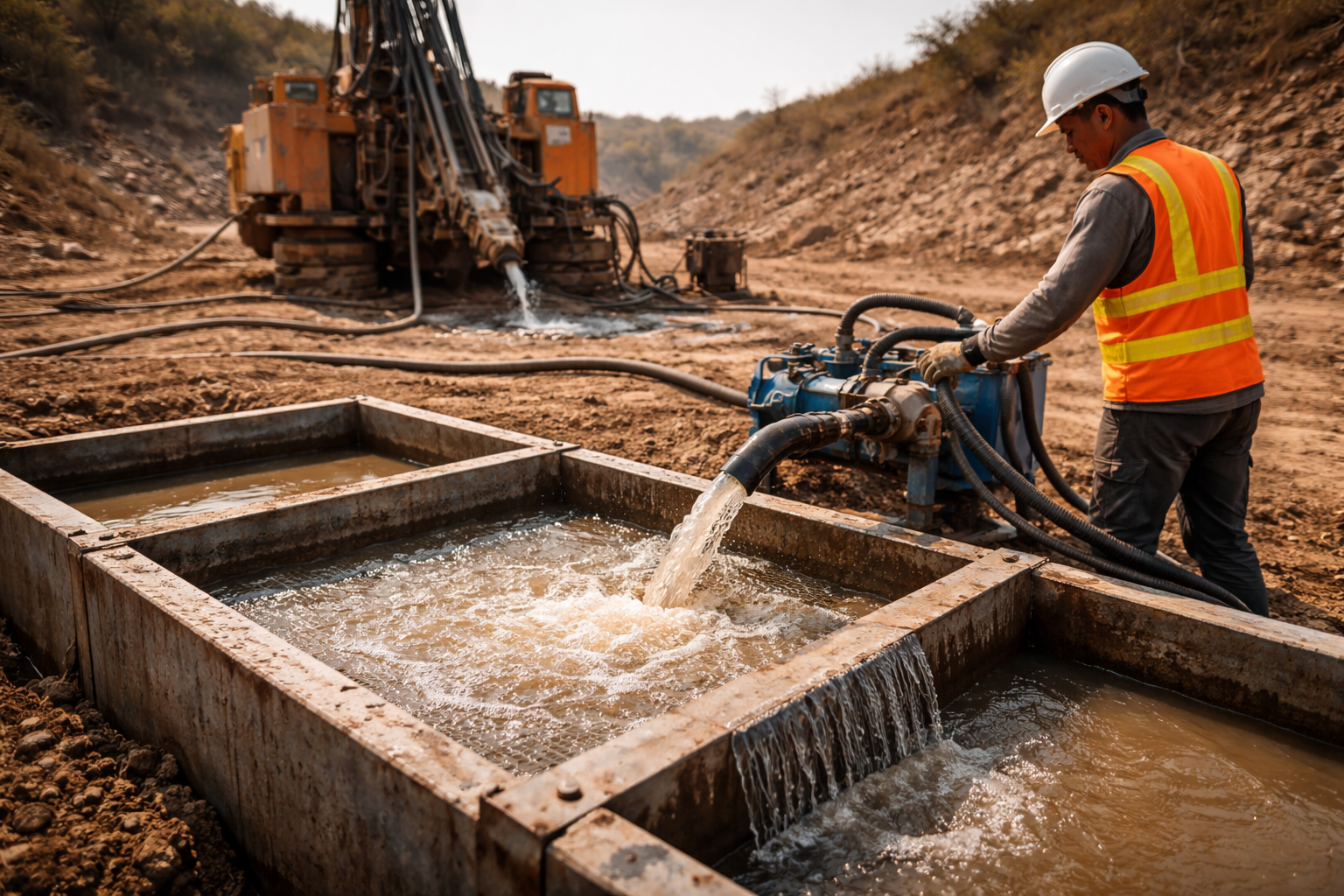
Simple settling pits and staged containment significantly reduce fresh water demand when maintained consistently.
Polymer and Fluid Control
Balanced viscosity improves cuttings suspension and wall support. Consistent fluid control reduces collapse risk more effectively than increasing raw water volume.
Tooling and Rig Selection Reduce Water Risk
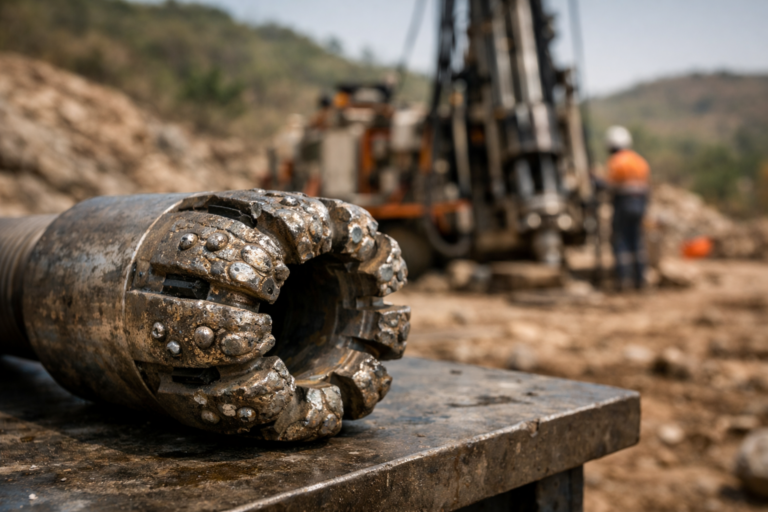
Correctly specified consumable core drilling products improve bit efficiency and reduce instability caused by recirculated cuttings.
In shallow or unstable formations, properly matched geotechnical drill rigs improve alignment and reduce vibration that destabilises borehole walls.
In confined underground environments, suitable underground drill rigs support controlled circulation management and stable setup.
Daily Inspection Checklist
- Return flow clarity
- Cuttings consistency
- Pit levels
- Pump behaviour
- Torque trends
- Signs of wall sloughing
- Recovery fluctuations
- Fluid viscosity stability
- NPT linked to fluid performance
The African Operational Context
Remote logistics, drought cycles and environmental compliance pressures require disciplined drilling water management Africa operations rely on.
Water mismanagement creates both mechanical risk and reputational risk. Water discipline stabilises performance and protects programme budgets.
Water Discipline Is Mechanical Discipline
Water supports cuttings transport, wall integrity and recovery. Reducing drilling water consumption successfully means increasing control, not increasing restriction.
Programmes that manage water as an engineered input reduce downtime, stabilise recovery and protect cost-per-meter under African operating conditions.
Frequently Asked Questions
How do you reduce drilling water consumption without losing hole stability?
Optimise circulation rates, maintain consistent viscosity control and implement reuse systems rather than abruptly lowering flow volume.
What causes hole collapse when water is limited?
Insufficient circulation reduces wall support and cuttings removal, increasing collapse and stuck string risk.
Do polymers help reduce water usage?
Balanced polymer programmes improve suspension and stability, allowing more efficient water use when managed correctly.
What are the early warning signs of poor hole cleaning?
Rising torque, irregular vibration, unstable penetration and inconsistent cuttings returns indicate insufficient hole cleaning.